• “Was it a mistake to freeze the djinn?” Al Hamra asked, flinching a little as a bullet struck the air hockey table he was hiding behind. The whine of gunfire echoed around the sumptuous lounge, and something valuable cracked loudly in the ricochet from the gunshot. Al Hamra winced and touched a thin, dark-skinned hand to his shaved head, long austere features screwed up with worry as he checked for blood.

    “There’s nothing there,” Adam assured him, speaking in loud, strained tones from his cover position between a large potted cactus and the heavy viewscreen that covered most of the outer wall of the lounge. The viewscreen was currently set to display a soothing galactic scene, the view of the Kua system from the space station they were docked in. Soothing spiritual music played gently over large, tastefully hidden speakers, an incongruous soundtrack to the brazen daytime armed robbery they were currently experiencing. Adam had picked the music earlier in the day, also incongruous given his hulking, heavily-muscled form and his history as a gun for hire. Heavy brows knitted now in a dark, scowling face as he peered over at his captain to check for injuries.

    Al Hamra gave a sigh of relief, spun into a crouch and raised himself briefly over the line of the air hockey table, his small accelerator pistol held steady in both hands, and squeezed off two shots in the general direction of the doorway. He ducked down again as the two bandits in the hallway returned fire, drawing another explosion of shrapnel from the air hockey table and blowing a hole in the beer dispenser at the far end of the lounge.

    “They might not be here for her,” their sensor operator Siladan yelled from further back in the lounge, where he and their medicurg, Dr. Delecta, were hiding behind a heavy marble flower stand. The marble was chipped from the rapid series of shots that had driven them there, and a torn mess of flowers and dark earth scattered the deck in front of the stand. From Adam’s position near the wall he could see Siladan, a ragged pink flower petal caught in his messy beard and his long, wavy dark hair falling around an olive-skinned face sallow with fear. “It could just be an ordinary robbery,” Siladan added, ducking back as another wild shot reverberated through the lounge.

    “On Coriolis station?!” Al Hamra demanded, yelling over the brief clatter of glasses falling in a cabinet to the rear of the lounge. Coriolis station was an enormous, well-regulated space station at the center of every trade route in the Third Horizon, and their ship the Phoenix of Hamura was docked in its most reputable shipping zone, Neoptra spaceport on the Ring that surrounded the station’s core areas. Robberies of any kind did not happen here, let alone armed assaults like this.

    As Siladan gave a cramped, anxious shrug a voice called out to them from the hallway outside the lounge. The intruders were hiding in a stretch of hallway flanked by two observation lounges, which opened at its far end into the airlocks and docking chamber, and beyond that the elevators they had used to come from the lower decks. “Hand over the girl and nobody has to get hurt!” One of their interlopers yelled out, punctuating his demand with a brief burst of wild, random gunfire that tore a nasty channel through the elegant tiling in the far corner of the room.

    So, they were here for the Djinn.

    Adam looked to Al Hamra, who shook his head. Absolutely not. The woman these footpads were looking for was their only income, and they could not afford to give her up. Sometimes you have to fake it to make it, and the crew of the Phoenix of Hamura were deep on the play. United as a team by an unexpected shipwreck, they had decided to go all-in on a second-hand, converted luxury yacht, which they intended to use to make money from fringe activities on the fringe of the Third Horizon. Unfortunately right now they were trapped in Coriolis station at the Third Horizon’s center, where every trade route and every Faction intrigue converged, where work should be easy to come by but where so far, in the week since they had taken possession of their armored yacht, they had found none.

    Except, that is, for the Data Djinn frozen in their cryogenic chambers. In their quest for quick paying work they had soon found themselves at Wahib’s Cantina, where a woman called Arkial Lima had found them and begged them to freeze her for a week in their stasis hold. An easy job with the dubious payoff of a promising tidbit of information from the Data Djinn’s extensive collection, but at least a small start on their path to riches. When they took her in they knew dangerous people were looking for her, but they had not expected them to find her so quickly, or to approach them so brazenly. They could not give her up, for reasons of cold-blooded commerce if not compassion. She was their only payday and this yacht that these footpads were slowly tearing apart was an expensive investment.

    “Icons damn you!” Al Hamra yelled back, his voice a little reedy with the tension of the moment. “Over our dead bodies!” This was greeted with a torrent of curses, and promises to make it so.

    Adam gestured to Al Hamra for the gun, but the captain shook his head. The parquet floor of the lounge was polished but treated to be non-slip, like every piece of decking on a good ship, and he did not trust he could slide the gun over, let alone toss it safely. Adam was the team’s soldier, their best shot and their most experienced fighter, but currently they only had two guns for the whole team, and they had not been carrying them in the lounge when the incursion began.

    “Where is Olivia?” Adam yelled, staying crouched low as another short burst of fire exploded along the wall behind him. Al Hamra returned fire, two careful shots to each corner of the entry. Their attackers were under cover on each side of the doorway to the elevator hall, and although there was another elevator hall at the other end of the lounge area, it was a hundred meters away and would mean surrendering control of the entire living space to their attackers. Olivia Greenstar, their engineer, was the owner of their only other firearm, a Vulcan carbine that they all assumed she had stored in her room, and yielding the living space in a retreat to the rear elevator would mean giving up control of her room. Unfortunately she was not on this deck, and they could not access her room without her.

    “I found her!” Dr. Delecta called back after a second’s quiet. Dr. Delecta was crouched deep in cover behind the marble flowerpot, out of Al Hamra’s and Adam’s view. She was also the only one of them carrying a comms unit when the attack started. “Olivia!” She said in a quieter voice. “Where are you? Can you get up here by the rear elevator?”

    There was a pause, a brief inhalation of breath as Dr. Delecta reacted in shock to whatever Olivia told her. “Is it bad?” As she listened, Adam made frantic gestures to Siladan, who he could still see, trying to encourage him to tell the medicurg to hurry it up. Siladan shrugged, and Dr. Delecta’s voice was lost under the roar of another burst of gunfire. Glass tinkled as a rare and valuable Miran glow-lamp shattered on the bench just beyond the flower stand.

    “She’s injured!” Dr. Delecta called out to them. “She was in the workshop when they came in, and they shot her before she could seal it.”

    Al Hamra cursed. “We need her gun!” He snarled. “Can she get up here?”

    “Tell her not to come up the front service elevators!” Adam called to Dr. Delecta. “Or they’ll –“

    As he said this there was a sudden snarl of gunfire, screams of pain from the men at the lounge entrance. The gunfire continued, an enormous wave of roaring sound as someone unloaded an entire cartridge of vulcan ammunition in the hallway. More screams, a brief spasm of someone else’s gun firing, and then silence.

    Salaam, motherfuckers!” A woman’s voice interrupted the silence from the hallway, accompanied by another woman’s nervous giggle.

    Al Hamra rose slowly from behind the air hockey table, pistol at the ready, and then gestured to Adam, who stepped out of the cover of the cactus. Behind them Siladan and Dr. Delecta emerged from the flower stand, Siladan brushing dirt and broken stalks off of his dhoti as he stepped around the marble structure and Dr. Delecta towering behind him, her tall dark form resplendent in a shimmering green lounging gown. They all stared at the entrance, where a pale-skinned, golden-haired woman in work coveralls leaned on a tiny, skinny woman dressed in the same simple grey deck clothes. The golden-haired woman was limping, favoring her right leg, and a trail of blood smeared the floor behind her left foot. A smoking, snub-nosed semi-automatic rifle rested by its butt on her right hip, and she grinned at the group as she stood in the doorway, the tiny woman beside her struggling to hold her weight.

    “I guess she kept the gun in her workshop,” Al Hamra concluded, as Dr. Delecta rushed past him towards their engineer. A moment later the small woman she was leaning on gave up and let Olivia slide to the floor, grunting and grimacing with the pain from her leg.

    “How did you know which elevator to use?!” Adam demanded, speaking to the smaller woman. This was Saqr, their pilot, so short she barely reached to Adam’s sternum as she stood in front of him.

    “I was on the bridge,” she told the big man, looking up at him from beneath a crop of short, messy dark hair. “I used the security cameras. When we saw they were in the hallway Olivia came up the elevator and I just helped her to walk through.” The elevators were behind the bridge, giving them the chance to flank the intruders. She turned to look behind her into the hallway, her face screwing up in disgust at the mess Olivia had made. The two men lay dead, blood and gore smeared over the walls and the fine parquet flooring and chunks of shrapnel, wood, glass and clothing spread over a wide area. “You really did a number on them, Olivia,” she observed, straining to sound neutral as she gulped down what might have been bile. “Should we wake Arkial and tell her about this?”

    Al Hamra stood in silence for a moment beside the diminutive pilot, watching as as Dr. Delecta inspected Olivia’s foot injury, and shook his head when he came to a decision. “No! We leave her in her chamber. If the Data Djinn wakes up she may panic and leave,” Al Hamra explained. “Which means she’ll take her info with her. Right now we have no witnesses to this, we can take their gear and hide them in stasis chambers until we leave the station. We can tell Arkial about it when she wakes up. On schedule,” he hissed for emphasis, “And confident we handled our part of our deal.” He gestured in the vague direction of the stasis hold, over a hundred meters behind them on the same level. “We have sixty four stasis chambers, plenty of room to spare until we get a chance to space the bodies.”

    “You’re seriously thinking of hiding the bodies?” Olivia asked him through clenched teeth as Delecta fussed at the wound, voice rising in incredulity. “You want to just keep them frozen in here while we look for work?”

    “You got a better idea?” Al Hamra demanded as he stood up from the bodies. “These guys were here to kill our client, which I would wager means they aren’t from up there.” With this he pointed above their head, to the higher levels of the station where the authorities resided. “They didn’t know she was in the stasis hold or they’d have come up the back elevators, which means they don’t know her personally, someone hired them. They’ve gotta be from below,” and with that he pointed down. “So either we’ve killed everyone who was out to get her and we’re in the clear, or more of them will come. But nobody’s alerting the Judicators, are they?” He pointed to an accelerator pistol lying beside the nearest body. “No guns on deck, right? So they carried that in here against all Station Law just to get to our Djinn. The Judicators aren’t coming for us, Olivia, and if we try to do the right thing we’re just gonna make our lives miserable. So we freeze them and go about our business as if it never happened.”

    He looked around at his crew, who had gathered around him as he spoke. “You wanted adventure,” Al Hamra pointed out to them, running one hand over the dark skin of his freshly-shaved head. “Well, you got your wish. Let’s freeze these scroungers, set some alarms on the gangways, and get back to our drinks.”

    If you’re interested in finding out what will happen to the crew of the Phoenix of Hamura and why they have a Djinn forzen in their hold, read the rest of the story at Royal Road.

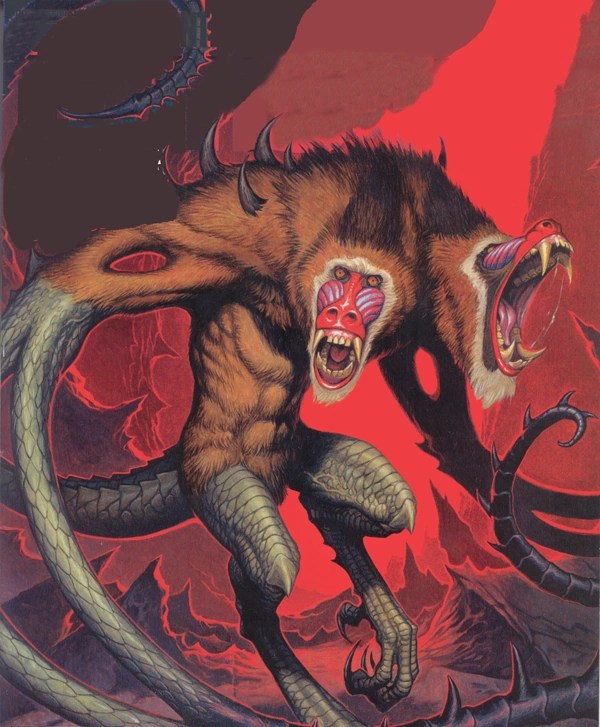
  • This post contains a huge spoiler for season 5 of Stranger Things, so here is a picture of an actual real life Demogorgon to fill up the screen, for those of you who haven’t seen this season yet.

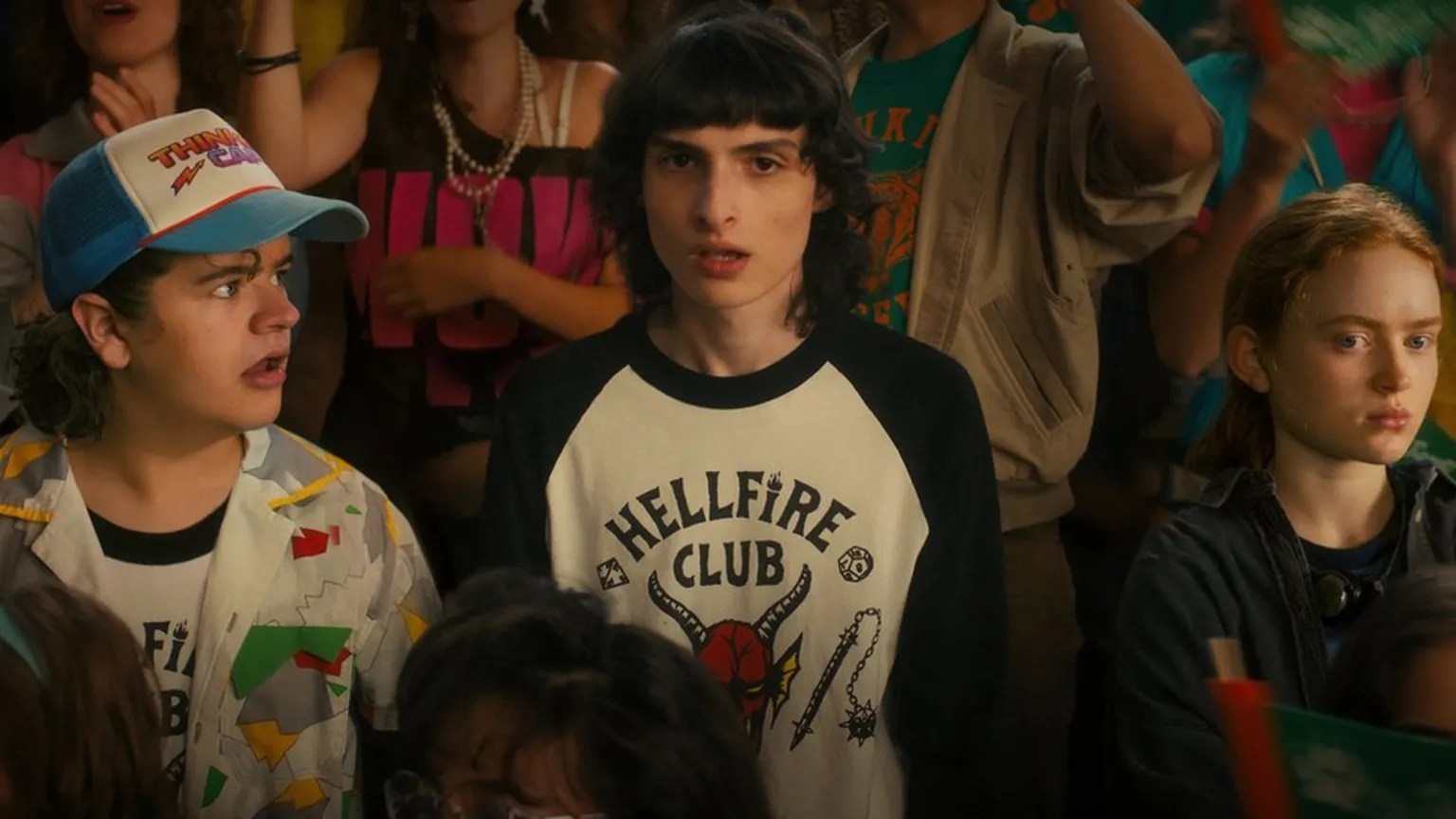
    So, it turns out (as I guessed in the middle of Season 4) that Will Byers is gay, which is a bit of an unfortunate writing decision since he is also, coincidentally, the only one of the original group of dudes who was taken prisoner and possessed by an actual demon from a place that we are now calling the Abyss, dropping small[1] metaphorical hints that being gay is a facet of demonic possession. Which, to be fair, is a very 1987 Indiana view of homosexuality! And, since Will is not a weak-willed person despite what the demon that possessed him says, Will decides to do something insanely brave and come out to his mother and all of his friends and associates in a single public declaration[2].

    Will’s coming out speech is long and kind of tedious but also in a way cutely teenage, since he finishes it slightly ambiguously by implying that he might be a misogynist, and has to clarify his coming out statement, but during the speech he reveals that Vecna showed him a terrifying vision of his future, in which he and his friends drift apart because they don’t really accept him, and he needs to move to the big city and becomes kind of detached and alienated from his friends.

    This vision is wrong for two reasons. First, it’s wrong because it’s not a vision that Will can afford to be afraid of. This vision is exactly what is going to happen in his future, and in the denouement of this show, assuming Will survives[3], we are going to see him hopping on a big silver bus to the big city, where he will slowly drift apart from his friends. What else could possibly happen to him? He’s not going to get laid in Hawkins, Indiana is he? And the trials, tribulations and joys of being gay are not only going to be completely different to those of his straight friends but he isn’t going to be able to talk about it when he returns. On summer break while they’re taking a break from gaming is he going to tell his mates about his first sauna experience, where he watched five big dudes fuck a skinny man every way they could? Are his friends going to think he’s the go-to guy for showing their kid pics to? The reality of their lives is going to drag them apart, which is a normal part of growing up anyway, and Vecna’s vision is barely even a vision of gayness. It’s just a normal vision of what happens to every ordinary person from every ordinary country town when they hit 20 and have to make life choices.

    The second reason it’s wrong is that if Vecna wanted to scare a young, uncertain, closeted gay boy in 1987, he would show him a different vision entirely. He would show Will being rejected by his own mother, estranged from his friends and moving to the big city not because his future is there but because he needs to escape the stigma, discrimination and violence that follows his sexuality in a small country town in Indiana in 1987. It would show Robin forced to move to California after her girlfriend is outed and loses her job at the hospital for the simple fact of being gay, and the two of them losing touch after Will flees the same stultifying atmosphere to live in New York. It would show him avoiding violence and discrimination, finding acceptance, exploring his sexuality and then being diagnosed with HIV. This would further alienate him from his friends and family, leading to the final part of the vision, where Will dies alone, horribly, in a rundown hospice for single gay men, eaten alive by opportunistic infections because he is too poor to afford AZT, which became available in the year of his coming out. Of course there is a more optimistic future for Will in reality, because new drugs will rapidly become available and affordable, and on Will’s timeline he will likely need them around about 1995, by which time they are much more widely in use and might even be enough to save his life.

    The real vision Vecna would show Will in 1987, in a country town in Indiana, would be a glimpse into a much more terrifying future than simply drifting apart from his friends. It’s hard to overstate how nasty western society was to gay men in the 1980s, especially rural America and Australia, and the show does generations of gay men a disservice by failing to express this nastiness properly. Same-sex activity was illegal in Indiana until 1977, 10 years before the episode where Will came out, and every adult in the room with him when he came out had grown up with the legal, cultural and political assurance that being gay was an abominable crime, a sin, a disgusting perversion. Homophobia in the USA in 1987 wasn’t just a sentiment, it was a semi-organized violent movement, where men like Steve Harrington and Jonathan Byers cruised the streets with baseball bats looking for ‘fags’ to beat up for fun. It was a movement that was legally defended, even to the extent of inventing a “gay panic” defense for homophobic attackers who were actually unlucky enough to be dragged before the courts for their crimes – they could just say they were propositioned by their victim and in the disgust and panic that followed they beat him up, a kind of religiously-inspired self defense. There is still today no national ban on this defense, and no legal statute in Indiana that prevents its use. Mike could have beaten Will to death in front of his mother, and stood up in a court of law to claim he panicked when Will said he had a crush on him. Would Vecna have shied from putting that in his vision for Will?

    Will’s mother Joyce would probably have watched through a wine-soaked haze in 1982 as Ronald Reagan’s spokesperson made jokes about AIDS on national TV (“The President doesn’t have gay plague”), and would have likely used homophobic slurs as a normal part of life. Local radio stations, churches and newspapers would have repeatedly published articles and reports about how degenerate and evil the gay lifestyle was, and probably during the height of fears of the epidemic, which corresponds with the period the show is set, would have talked about how AIDS was a punishment for sin. By 1987 the tide of evil speech had turned somewhat, with Ronald Reagan making his first speech on the disease in June of that year, just a few months after the registration of AZT as a treatment in adults, but it remained a highly contentious issue and homosexuality more generally remained a topic of scorn and violent reaction. In fact, the 1995 Olympics were held in a state where same sex activity was illegal, and to this day Indiana lacks any state-level legal recourse for people fired on the basis of their sexuality.

    It’s just inconceivable that Vecna’s vision for Will, a boy struggling with the realization that his sexuality was not normal and that he was carrying the “sin” that this school, his peers, his politicians and his churches had been vociferously railing against for the past five years, would not have shown this future. It’s just not possible that he would restrict this vision to a gentle depiction of what will definitely actually happen naturally to a gay man with straight friends, and not expand it to cover the full horrors waiting in one of Will’s possible futures.

    Unless, of course, the writers know nothing about the history of queer struggle. Which is what is actually going on here. They wrote a coming out scene based on the relatively benign environment of modern 2020s urban America, without any particular awareness of or attention to the history of queer struggle and in particular the desperate nature of the struggle during the first decade of HIV. It’s fine not to know these things, but if you are going to do social commentary in your TV shows you should do it right, and this coming out scene was obviously intended to be a significant moment in the show’s arc, happening as it does just in the calm moments before the beginning of the final confrontation. Taking on the mantle of the gay struggle like this, without proper attention to the depth and severity of that historical battle, is a kind of stolen valor, and I’m disappointed in the producers of this show both for the shallowness of this coming out scene, and for misappropriating the queer struggle in this way. Do it right, or don’t do it at all!

    We don’t need our TV shows to embrace every form of struggle. This show has been conspicuously careful in its depiction of mid-80s rural mid-western American life, with very few black people in Indiana and no girls in the D&D group, which is very representative of how things were in that place and time. The decision to have two gay people in a squad of 12 or so characters is a decision to over-represent queer characters, to elevate homosexuality to a topic in the show where race and gender relations were largely ignored. If you want to do this, you should take the issue seriously, and not gloss over it with an unrealistic and vaguely cringey depiction of one of the most important parts of a young gay person’s life, which reduces a period of intense, intensely dangerous struggle to a few petty concerns about friends and family.

    Do it right, or don’t do it at all!


    fn1: By which I mean, you could probably infer that this is a nuclear-bomb sized hint that being gay is bad. I genuinely don’t think the writers meant to give this impression, and also Robin is gay, and she hasn’t been face-fucked by any demons (that we know of – but she went to high school in America, so who’s to say?), but it’s a pretty well-established element of religious conservatism that lesbianism is not viewed as the same kind of evil as male homosexuality, so the distinction still squares with a very, very born-again Christian perspective on homosexuality and sin

    fn2: For discussion of what some queer people think of this scene, see this Reddit thread, which makes the point that he came out in front of Murray Bauman (a weird middle-aged conspiracy theorist), Mr. Clarke (a middle-aged high school teacher) and Kali, some chick they just met who is obviously dodgy and is simultaneously trying to talk Eleven into a suicide pact, and who has obviously lied about what was being done to her in the army base. Was Hopper there too? These are dangerous people to reveal your deviant sexuality to in the 1980s! That Reddit thread also makes the point that he outs Robin without her permission, and makes clear to everyone that he had a crush on someone who was in the room with them. It cannot be stressed how dangerous this is to do, even now, but in 1987??! It’s also a really cruel twist on a gay character – who remain quite rare in mainstream TV and cinema – to have him out himself to his friends and colleagues only because he is being threatened with outing by a powerful, evil force. This is the worst, most disempowering and abusive way to do this thing that should be a special, personal and extremely cautious act!

    fn3: Mainstream TV and cinema have a very, very bad record of killing off gay and lesbian characters and fat women. They didn’t spare the fat chick in season 1, and I fully expected they’re going to whack Robin before this season ends. Will should be keeping an eye over his shoulder too.

  • These boys have been completely ruined

    I was hoping season 5 of Stranger Things would be a tour de force, a final reckoning with Vecna in which the kids from the previous seasons defeat him, learn the truth about his origins and persistence, and ideally destroy the military organizations that gave birth to him. These guys have been fighting this pernicious villain for four years now, they’ve grown up in battle, and in season 5 I was hoping to see them join up for one final adventure as a well-oiled team of monster-hunters. Sure, they’d be under-resourced and forced to do everything secretly, so there would be setbacks and challenges, and maybe there’d be a few episodes where they didn’t realize Vecna was back and took a bit of time to understand what was happening, just like in the previous three seasons. I could even forgive them ignoring Joyce’s warnings like they did in every previous season, even though she always turns out to be right, even if just for old time’s sake. But ultimately once they figured out Vecna was back I was looking forward to them tooling up, spinning out some hair-raising but exciting schemes, figuring out what was going on, and then destroying Vecna, the Upside Down, and everyone who set this whole shitshow in motion, ideally in an epic final showdown where we see them working together as a well-oiled team of friends who have been unified by years of struggle.

    Instead, I get whatever the fuck this is: a stumbling, confused monstrosity of a show in which everyone is constantly on edge, everyone is constantly irrationally angry with each other, and their schemes are wildly stupid plans that don’t make sense and don’t matter. What a shambling wreck of a finale! I’m six episodes in and have reached that point where I’m regularly reaching for my phone to distract myself during the tedious arguments and weirdly mistimed heart-to-heart moments. And as is all too common in modern TV shows, I’m alternately raging at the ruination of characters I enjoyed, and frustrated at the absolutely zero-grade, low-effort writing. Let’s explore the three key flaws of this show’s final season, with spoilers.

    The irrational rage

    The thing that most ruins this season of the show is the constant nit-picking and fighting between characters, both within the group of kids but also generally in the world. I don’t know what directorial or production motivation lay behind the decision to make these interpersonal slanging matches a key part of the script, but they are nonsensical and tedious and yet so omnipresent, spontaneous and angst-ridden that they actually make the show distressing to watch. They’re so bad in fact that the most relaxing scene so far has been the enormous battle between demogorgons and soldiers in episode 5. You know you’re doing badly when a major battle is a break from the dialogue between friends!

    Examples of this that are particularly egregious:

    • When Dipshit Derek turns up at the army camp to join the other kids that the soldiers took there for their own protection, and is approaching the gates outside the camp, the soldier on guard instantly starts snapping at him and demanding to know why he can’t read the No Trespassing sign (which is obviously about the inside, not the outside, of the base) and continues to yell and snap at him even as he leads him into the barracks where everyone in the base knows they are supposed to protect children
    • Dustin and Steve are constantly snapping and yelling at each other, and projecting clear and continuous hate at each other in every scene where they’re present, for no reason I can understand at all, and with no effort by them or anyone else to resolve or defuse this aggression. This is particularly terrible when they’re exploring the “shield generator”, the metaphor Dustin uses for the mechanism to keep the Wall up; we have known for four seasons that these kids use nerd culture references to explain the supernatural phenomena of the Upside Down, Return of the Jedi was an insanely popular film, and Steve is utterly scornful of this well-established mechanism for understanding the world which in this instance is based on a movie he admits he enjoyed!
    • Eleven and Hopper have an absolutely antagonistic relationship that has no basis in sense at all, they’re constantly yelling at each other, even throwing things at each other and even arguing when one of them is clearly hurt or in trouble, or when they’re about to be attacked. Now I confess there are lots of reasons to hate Hopper, who is the most tedious and annoying character in this show and has been for a long time, but these two are meant to be really close! And again, the fights spark from nothing and have no antecedent. Just stop it already!
    • Nancy’s two suitors, Steve and Jonathan, are an incomprehensible mess. Its been months since this conflict revealed itself (sometime in season 4) and these people are teenagers, this kind of feud just doesn’t last! By now Nancy would have picked one of them, or they would have had a physical confrontation and gotten over it, and in particular Steve would already have moved on to a cheerleader. Having this fight in the bowels of the Upside Down over a girl who, from a teenager’s perspective, is ancient history, is just exhausting. Get it over with!

    It’s really hard to explain how frequent, spontaneous, and completely incomprehensible these spats are, how they seem to happen between any pair of people with no explanation or triggering event, and are clearly a directorial or script-writing decision, some kind of theme for the show. Maybe at the end we’ll find out that this was some kind of aura cast over the town by Vecna but by god it is tedious and it has wrecked every character.

    It is also being used in one of the most boring, ancient and weak-willed of plot devices, in which characters decide they’re pissed off / bored / frustrated with each other and go off doing things without telling each other. Robin and Will fucking off into the woods at night, without telling anyone, after lying to Will’s mother about what they’re going to do, is a classic example of this. You guys know there are invulnerable monsters wandering in the night! Don’t fucking do this! Also Max not explaining anything to Holly and just ordering her to go to the wall, the kids leaving the church in the Upside Down after they told Hopper and Eleven they were waiting there, Hopper planning to kill himself without saying goodbye to Eleven … This shit was old in season 1 of the X-Files. Just drop it already.

    It’s actually exhausting to watch a show with this much pointless interpersonal conflict, which is consistently at such a high level that it objectively interferes with the efficiency of their missions and risks getting them killed. There was less of this shit in Suicide Squad or The Dirty Dozen, for fuck’s sake. Why? Why?

    The weird anxious fidgeting

    Another strange offshoot of this conflict, or an adjunct to it, is the constant atmosphere of nervous energy from all the characters. The way Henderson reaches for a map in his car, the way Joyce rushes to urgently smash buttons on the walkie-talkie, face contorted with terror, just to say “yes, I’m here, how are you?”, the rushing and snapping and urgent hand movements. What is it all about? Has Joyce suddenly developed some kind of nervous disorder? Is Henderson on speed? Why is everyone so fucking jumpy at the smallest, most ordinary tasks? Not only does this make the slow periods of the show into tense, difficult scenes for no reasons, it drains the actual action scenes of the tension they should have. When the kids are being smuggled out of the barracks and Will and Mike are urgently trying to fix the leaking pipe I can’t tell if their urgency is because the pipe matters (which is actually unclear in this scene, because of the incoherence of the basic plotlines) or because they just need to work off some of this nervous energy.

    I appreciate these guys have been through hell and back and they’re teenagers, but it’s exhausting to watch. People don’t need to be constantly stabbing fingers, snapping books and maps open, hammering on switches, and jabbering urgently to put across a sense of urgency, trauma or fear. It’s bad writing, lazy scene-setting. Drop it!

    The insane plans and incoherent plots

    This season introduces a new setting, a dreamscape of interlocking memories where Vecna keeps the souls or minds of the children he has captured. While physically they are locked in an Aliens-like hive prison being stuffed full of some kind of slug egg things, their minds are off in this dreamscape, enjoying holiday time in a giant house. Max, meanwhile, is trapped in a coma in the real world while her mind is held in this dreamscape. She almost escaped from it by following the sound of her favourite song but failed to make it (because she stupidly paused). She was then almost caught by Vecna but fled to a cave that is part of a memory that terrifies Vecna, for reasons I expect I will discover by the end of the season. Now, she has found Holly at Vecna’s house and is helping Holly to escape by working back through the interconnected memories of how Holly got caught by Vecna. If they can find the initial memory of how she met Vecna, she figures there’s a way out of this dreamscape. As far as we can tell this way out is for both of them, for Holly and Max, and this is clarified even when Holly asks Max “are you coming too?” And Max hints she may stay to help the others. So it is clear that this escape is for both of them. If Max escapes she returns to her body in the hospital and wakes up, a fact made very clear by what happens to her body when Vecna catches them.

    But what happens if Holly “escapes”? Her body is in the Upside Down, being face-fucked by Vecna’s octopus. So are we meant to believe that after all the trekking through the dreamscape, if Holly climbed through that final window, we were going to have a scene where a child, a 12 year old girl, opens her eyes in her chitinous cell in the Upside Down, with a tube forced down her throat? What then? A torturous couple of minutes of watching a girl being face-fucked by a tentacle? I put it to you that the writers didn’t really think this through, and the entire dreamscape scene with Max and Holly was superfluous, a scenario that could not be allowed to resolve itself.

    Thanks for wasting my time, dickheads.

    Or how about the kidnapping of the Turnbow family? Somehow Alicia manages to drug the entire family, and stabs her former best friend with a hypodermic needle, they smuggle them all to a farm and chain them up in a pig pen, then the demogorgon attacks so they flee with just Dipshit Derek Turnbow, leaving the family drugged and chained up in the pig pen in the middle of nowhere, and we never again hear what happens to the family. Do they wake up in terror, chained up in a pig pen far from home with no one to help them, and everything’s okay? Why hasn’t Derek asked about them even once? Not even a sentence to say “Oh yeah Joyce went back and untied them and left a van for them”? Not even an anonymous phone call to the police? We’re meant to believe the army are bad guys for abducting, drugging and using people to further their secret plans, and yet …

    What was that about? Or Hopper’s dumb as fuck plan to go kamikaze on Vecna, a guy they know is basically invulnerable to everything. Or what about the army’s plan to put the kids in a barracks right in the centre of Hawkins, knowing from bitter, ongoing experience that none of their weapons work on demogorgons? Why not fly them to California, where Vecna can’t get them? Or at least develop a weapon that actually works, which they’ve shown they can do for Eleven?

    If you removed this waffle, and these impossible, inexplicable and incompetent plans and schemes, the show would be about 10 minutes long. But the writers couldn’t be bothered coming up with plans and schemes that work, so we’re left to struggle through long sections of plot that were either designed not to make sense (the dreamscape with Holly) or leave a weird or bad taste in your mouth (the kidnapping of the Turnbow family) or are just straight up silly (everything the army does, and everything Hopper does). Is the entire season filler, sprinkled with incomprehensible spontaneous warprage by the main characters?

    Thanks for wasting my time, dickheads.

    The destruction of Robin Buckley

    Robin was a fun character in earlier seasons, funny and cynical and quite cute, but in this season she has turned into a neurotic weirdo who talks too much. I think the writers are trying to make her the 1980s version of a neurodivergent person, someone who overshares and doesn’t have a filter and is socially awkward, but she wasn’t that person in the previous seasons, and it has reduced a quite strong and rich character into an annoying, overly vulnerable stereotype. (I also expect that since it is Rule 101 of Hollywood that the lesbian and the fat girl always die, she will be killed off this season).

    Robin isn’t the only character to have been destroyed. Joyce is now dumb, naive, whiney and weak. Steve Henderson has turned into a raging dipshit. Will and Mike can’t act. Eleven is meant to be some kind of super soldier but is completely emotionally dependent on her abusive, useless stand-in father figure. Nancy retains her strength but is also a constant ball of coiled rage. In time-honored Hollywood tradition, they’ve wrecked almost every character.

    Max and Bauman are still okay though. Except Max, the strongest and most active character of the previous seasons, has been bedridden, and can’t do shit anymore. Thanks, guys.

    Bonus whinge: The Sorcerer

    One of the more memorable moments of the show so far is Will’s discovery that he can “hack” the hivemind, and take control of the demogorgons, which enables him to save all his friends’ lives and makes him pretty cool. Aside from the fact that “hack” as a phrase only really came about in the early 1990s (Neuromancer was published in 1984 but the cyberpunk genre as a whole and its associated lingo only entered popular cultural awareness in the 1990s, so Joyce certainly wouldn’t understand it), this was a fun and exciting ending to a great battle scene. Although there was some really bad acting in that battle scene, it at times had hints of a Game of Thrones battle scene or the great single-shot takes of Children of Men, it was tense and dangerous and seeing the demogorgons in full fury against an entire division of soldiers was great[1]

    Except, that as soon as he does this the rest of the team start lauding him as a “bona-fide sorcerer”, a real wizard, and referring to him as “The Sorcerer”. It’s even in the chapter title. They even specify that he must be a Sorcerer because this character class uses their magic innately (as he did) rather than getting it from books.

    The Sorcerer character class was first introduced to Dungeons and Dragons in 2000, with the release of the D&D 3rd Edition. It did not exist in AD&D, which is what the characters of this show are used to, and was in fact the title of an 8th level magic user. According to Stack Overflow a Sorcerer kit was introduced in a supplement in 1992, but essentially this class did not exist. I’m sorry but D&D is a fundamental part of this story, and although they get elements of the original playset wrong to make the adventures and phraseology more interesting, introducing a class from 15 years after the show was set as both an episode title and a major dialogue point is just sloppy. Don’t do this, people!

    Also, they never ever said this about Eleven, who they met first, who also uses her magic powers innately, and who was vastly more impressive to them than Will and has saved their lives like a million times using her innate powers. Now they’re acting like they’ve never seen these powers before. WTF is that about? That’s stolen valour, is what that is.

    An exhausting and disappointing end

    I’m going to finish this season, make no mistake, but I am really disappointed in what has been done with it. I don’t know why they’ve made everyone angry, wrecked the characters and written so many complicated, unnecessary and irresolvable plots. I hope they clean it up for the finale. But this is everything I didn’t want from this show. It’s another great TV series that has been wrecked at its end by deliberate, inscrutable writing choices, yet another failure of the engine of modern culture. It joins Game of Thrones and Invasion as a show that had so much promise, and was wrecked for no apparent reason at all. The cultural choices that major writers and producers make in modern TV are a complete mystery to me, and I hope one day they listen to the complaints leveled against them, and actually learn to respect their craft and their audience.

    A final note

    If you enjoy my reviews and think I have anything interesting to say about modern sci-fi and fantasy, please consider reading my fiction at Royal Road.


    fn1: Incidentally, this battle scene contained some really great examples of the way guns work as a weird kind of magic weapon in American TV. The soldiers – apparently professionals! – surrounded the demogorgons in a loose circle and all started shooting at a single demogorgon at once. So either every bullet they fired hit the demogorgon, or they were using special magic movie bullets that don’t kill their friends, because usually when people stand in a circle and shoot they shoot each other. Ridiculous!

  • 4am. WBGT: 87

    The heat hit Felice like a punch in the face, a wall of seething fury. She started sweating as soon as she stepped onto the smooth panels of her balcony, felt it prickling across her brow, and a few moments later trickling down her ribs. The city lay shrouded in early morning darkness, the night sky humming with the faint susurrations of a city still sleeping, its industrious millions almost entirely unaware of the vast disaster that was falling on them from the uncaring heavens.

    As she pulled the doors open she could not decide if she wanted it to be unusually hot, enough to justify this lunatic trip, or a typical Houston summer morning, confirming her foolishness and offering her one last chance to acknowledge her own stupidity and back out of this whole thing. When she woke, dragged out of uneasy slumber almost as soon as she had gone to sleep, she had thought of calling the whole thing off, her stupid escape plan from a creeping disaster that almost no one in that wide, sleeping sprawl even knew was coming. Her boyfriend’s final text had not helped to assuage her self-doubt, four separate messages delivered after midnight in response to her final uncertain pleas, short and sudden rejoinders like stabs:

    This is crazy girl

    I can’t believe you’re gonna break date night for this shit

    I ain’t gonna go with you on this dumb-assed trip

    Those crazy hippies have got to you. We’re talking about this when you get back

    Not really the best thing to have read as soon as she woke up, so to bolster her waning confidence Felice took out her phone and flicked down to the last texts from Raven:

    It’s a good plan Felice. Please don’t back out this morning. You know what’s coming.

    And then:

    We don’t do addresses. But if you want to check in, head north up the 83 after Junction till you see this

    Followed by a picture of a tumbledown shack, half-hidden in tangled shrubs, connected to the highway in the background by a short, uneven dirt path.

    So, neither her boyfriend nor the source of the warnings Felice had received about the coming disaster trusted her. But Raven’s caution made sense given how Felice – well, Felice’s colleagues, mostly – had treated them. Jared’s viciousness was a little surprising, but at least her mad fancies about this trip had brought that to the fore.

    She stared out across the eastern expanse of the city that had been her home since she started college, frustrating and complicated and unsuited to her in so many ways but still the place she had lived these last eight years, the place where she had learned the law, learned love and loss, and gained this tiny glimpse at a terrible future. What would it be like by tomorrow? She wondered if anyone else in the city was standing outside now, contemplating the same flight as her.

    Probably only she could be this impressionable. She again thought of calling the whole thing off, retreating to her bed and forgetting the whole crazed fancy. But as she stared out at the city, gripped by the self-doubt of the loner, the isolation of Cassandra, the heat sank into her bones, and she began to feel it: not the mere discomfort of sweat and stickiness but a vague animal fear, a current of visceral, physical uncertainty flowing in the opposite direction to all her civilized doubts. It should not be this hot at 4am. In her instinctual self she expected sun, the rippling hazy air and scintillating brightness of midday, not the darkness and silence of deep night. Run, her instinct warned her, someone has stolen the sun. How could it be this hot before the sun had even risen?

     Shaking her head, she retreated from the heat into the relative cool of her living room, her regrets tempered by animal wisdom and the sure knowledge of the shame she would face if she canceled now. She had a room booked and friends to collect, precious paid leave already taken. She had set herself this stupid quest, crying wolf for a week, and now she had to go through with it. With a sigh she collected her coffee and began checking the things she needed for her trip: clothes and make up for a couple of days in a small sports bag, and in her backpack her driver’s license, national ID card with proof of citizenship (just in case), state ID with proof of gender (just in case), her bar certification, spare charger for her phone, sanitary products and painkillers, print out of her hotel booking with clearly visible Texas address (just in case), and a few snacks. She was ready to go.

    Ten minutes later she was in the basement car park, slinging her sports bag into the trunk of her car, placing an icebox on the floor of the rear passenger seat, backpack next to the driver’s seat. The underground car park was already uncomfortably warm, and she was sweating by the time she started the engine and immediately turned on the aircon. She wondered if the aircon of her cute little urban runabout would cope with the heat aboveground without a head start in the relatively cooler carpark. Her car was a gasoline vehicle, of course – electric cars now were just expensive, inconvenient oddities for collectors – and running it in the underground parking space would stink out the elevator and draw complaints if anyone noticed. Still, it was very early, and better safe than sorry … she decided to run the aircon and take the risk of complaints.

    While she waited, she turned on the radio, already tuned to Raven’s channel and broadcasting the first of the day’s emergency warnings:

    EMERGENCY! PLEASE LISTEN TO THIS EMERGENCY ANNOUNCEMENT! A HEAT DOME IS COMING. TEMPERATURES ACROSS THE ENTIRE TEXAS BASIN WILL BE FATAL. RESIDENTS OF SOUTHERN TEXAS, YOUR POWER GRID WILL FAIL BY MIDDAY AND YOU WILL BE TRAPPED UNDER A FATAL HEAT DOME. GET UNDERGROUND OR GET OUT BY MIDDAY.

    This repeated a few times, a strong, urgent woman’s voice building to a peak of alarm at the end of the last sentence, reassuring Felice that this crazy evacuation was the right decision. Raven had warned her about the heat dome a week back, with more urgent messages a few days ago. Their first communication in months, leading to this unexpected and uncharacteristic evacuation. Felice was a lawyer, not a panic-merchant. But here she was, sitting in her car with the aircon running full blast, listening to alerts from a barely legal underground radio station, possibly ending her relationship, on the advice of an activist she barely knew.

    She sighed, pushed the car into drive, and headed towards the exit. Some kind of road trip, this.

    #

    4:30 AM. WBGT: 91

    Felice sat in her parked car, tapping the wheel impatiently and waiting for a message or a sign of life. Sunrise was still two hours away, and the cloudless sky was a dark, empty vault, the only light coming from a small number of haphazardly spaced street lights. Across the road her friend Mini’s house was dark and still, no lights visible in the upper floor of the duplex, no signs of movement behind drawn curtains. Mini lived in a quiet neighborhood of low-rise buildings, duplexes and expensive family homes, arrayed neatly along a two-lane street. Many of the houses had small front yards, in most of which the national flag hung limp from slanted white flagpoles.  Since loyalty to the Party was synonymous with loyalty to the country, many of the houses had a second flagpole hanging the President’s Flag, its black and red squares a stark contrast to the brighter colors and shapes of the national flag. Mini’s house had no flagpole, but someone had stuck two small plastic flags on the postbox. Across the road from the house, a short distance in front of Felice’s windshield, the smiling face of a man in uniform beamed down at her from an official-looking plastic placard fastened to a telegraph pole, his name and service dates embossed above and below the picture in silver writing. She could not tell in the morning darkness whether it was a memorial or an honor plaque.

    Felice was just about to pick up her phone to call her friend when the second floor door opened and Mini emerged, walking lightly down the stairs followed by her man. At the bottom she looked around, peering into the darkness until she saw the car, waved and crossed the street. Felice opened her door and stepped out of the car into the fierce heat, feeling its muggy embrace instantly on her skin. She waved back to Mini and came forward to meet her, embracing her as she stepped off the road onto the grassy verge by the car.

    “Mini,” she greeted her, speaking barely louder than a whisper. Mini’s parents had named her after a female character in a famous children’s book about a wizard’s school but she hated the name, and insisted on being called by her diminutive, even at work. The nickname suited her, though – she was a short, bouncy, slightly rounded young woman with cheerful blue eyes and blonde hair falling in confused tumbles and waves around pale shoulders that almost shone in the dim street light. Felice was also short, and they could look each other in the eye as they gripped each other in greeting. “Thank you for coming. I was worried you had forgotten.”

    “Of course not, ‘Lise,” Mini replied in the same quiet voice. “This is going to be an adventure. And you’re right, it’s so hot!” She brushed her hand across her forehead, drawing away a sheen of sweat. “It’ll be nice to get away if it’s going to be this hot until the weekend.”

    “We should get into the car,” Felice said, turning to greet Mini’s man. “It’s cool inside. Aaron,” She called to the man quietly as he staggered up behind Mini. While Mini had dressed nicely for a road trip in summer dress and pumps, Aaron was wearing sandals, sloppy shorts and a plain light-colored t-shirt, his clothing lazy as always. He was a handsome, slender man with very white skin, messy short dark hair and a vague, unfocused expression. “You can put them in the trunk,” she told him, gesturing to the three bags he was struggling with and dangling her keys, but he shook his head.

    “Just in the back is fine,” he replied. “Y’all can sit in the front and gossip, there’ll be room in the back for our stuff.” Felice did not know Aaron well, but he was always attentive to her friendship with Mini, comfortable letting them socialize together while he lazed around in the background. He pulled open the back door of the car and began slinging in bags, first two duffel bags and then a longer, slim black bag that he fed in between the front and back seats, resting it on the icebox. “I’ll jump in before the heat gets in,” he said and hustled around the car, brow already slick with sweat.

    Felice turned back to Mini. “Do you need to hide anything?” She asked, voice dropping lower and conspiratorial. “I have a small space behind the wheel in the trunk.”

    Mini waved her hand dismissively. “No ‘Lise, it’s fine. I have an injectable, I get it from my mom when I go back to Maryland. No need to hide anything. Do you have anything in there?”

    “Not really,” Felice replied adding in a slightly crestfallen tone, “Jared refused to come. Did you bring everything else you need? I booked three nights.”

    Mini nodded. “We’re good. Let’s get in the car, it’s stinking out here.”

    You can read the remaining six chapters over at Royal Road . I hope you like them!

  • I really don’t want to side with this, but …

    Out of a lack of good sense I started watching the new Netflix show The Diplomat, which is basically about a woman called Katherine Wylder who gets appointed US ambassador to London just as an enormous shitshow of international relations swamps the post. She gets entangled in this quite complex international conspiracy while trying to negotiate her failing marriage with a man called Hal who is a former ambassador now relegated to house-husband duties, and struggling with her own feelings of inferiority in the role.

    I think it’s quite poorly acted and at times poorly written, but the plot is fun and most of the British characters (not the Americans, sadly) are quite fun. The British PM is obviously intended as a slightly less on-the-nose version of Boris Johnson, the Foreign Secretary (Denison) is a beautiful man with a great voice and a nice delivery, and the depiction of UK parliamentary politics and the seediness of the Tory party is quite fun. Unfortunately it suffers from several flaws: all the main characters are absolutely awful, the acting and dialogue is overblown, and it suffers from that kind of weird nationalist/liberal self-aggrandisement that characterized shows like The West Wing and that godawful series about political journalists, and that has infected every hypocritical late night TV comedian and democratic operative. In this case the lack of self-awareness, the hyping of American goodness, and the ignorance of America’s past or responsibilities, is so extreme that I can’t think of anything else to say about it except that it’s fascist.

    I hate to be one of those people who says all modern media is fascist, but by god when I watch shows like this I can’t help but fall into that melancholy trap. Before I explain / rant about that aspect of the show, however, some thoughts about the awfulness of the main characters.

    How awful does a character have to be?

    It’s interesting how far the show goes to absolutely debase the two main characters. Kate Wyler is an atrocious human being, a bully to her junior staff and a histrionic fool around her husband. She is also weirdly disgusting, or at least the show sets out to make her behavior repulsive – the way she eats, the way she makes her husband sniff her armpits and pisses in front of him, the weird way she flirts, it’s all awful. It’s particularly weird because she’s flirting with the foreign minister, Denison, who is a beautiful, splendid figure of a man who could have any woman he wants, but we’re meant to believe he somehow finds her attractive after all the grossness we’ve seen from her. It doesn’t make sense.

    Beyond her physical grossness, Kate Wyler is an awful person. She loses her temper instantly with people beneath her, but knows full well to suck up to the people above her, she blows hot and cold with her peers and yells at them for perfectly reasonable mistakes or misapprehensions. She constantly changes her tone with her husband, who we’re supposed to believe she’s divorcing while she’s constantly getting him to do stuff and regularly begging to go back to him. She tells everyone she doesn’t trust him but believes every one of his lies, tries to be a strong and independent woman but is hamstrung by constantly comparing herself to him, blames him for getting people killed in Afghanistan but admires his bravery and initiative … Every episode is a constant rollercoaster ride on her irrational rages and intemperate assumptions and judgments. I think this is made worse by the actor, who seems unable to achieve any acting register between flat and screaming rage. In every scene Kate is on the verge of exploding, or is overwhelmed with sentimentalism.

    Meanwhile her husband is a shifty, lying, feckless, deceitful man who respects no one, and lies to everyone to achieve what he thinks is right. He never communicates clearly, doesn’t listen, and is pursuing his ambitions individually and through his wife, who he is manipulating towards a position of higher power. Nobody with any self-respect would stay married to this shiftless little shit. Except Kate Wyler, of course, who is meant to be a picture of independent womanhood while she has allowed herself to be abused and misused by this cockhead for 12 years.

    Also, Kate Wylder has a weird attitude towards femininity, a classic American woman’s double standard. She hates wearing dresses and seems to not know how to wear them or high heels comfortably – an impossibility for a female ambassador from her social background – and hates the very idea of being seen in a dress, which is demeaning to her. Until she needs to flirt with Denison, the night she’s planning to fuck him, when suddenly she can comfortably wear a sexy red gown. A classic madonna/whore complex. Thanks, Netflix, for presenting me with such a novel approach to modern femininity! Furthermore, every couple of episodes we get presented with some weird problem with her clothing – a stain on a grey suit, or needing to use a paper clip to fasten her pants even though she’s staying in a noble house with a staff of fifty, none of whom seem to have access to a sewing kit. This is awkward, makes her seem uniquely unfeminine and also entirely unsuited to the role of ambassador, and after a couple of incidents begins to seem strangely perverted on the part of the writers[1]. Why do we have to be subjected to this? It may be part of the broader sweep of establishing Kate as a highly-strung, somewhat messy person – we also see her using her knees as a writing table when she’s sitting at a table, forgetting her reading glasses before an important meeting, and constantly forgetting to carry the script of her speeches – but I think it works better to make the viewer feel gross, and to establish a strangely voyeuristic perspective on the main character.

    Finally, the other big problem with Kate Wyler is that she is a bully. She sucks up to people above her, like the British PM and Foreign Secretary and the US Vice President, and punches down at her staff and other weaker people. She yells and bristles and snaps at her underlings, doesn’t let them finish sentences, and overrides their suggestions to her own detriment. In the presence of her underlings she always believes she knows better, but in the presence of the VP, for example, she instantly accepts every correction no matter how stupid, and she is deferential to the PM and Foreign Secretary, who she also stupidly decides is “a very good man”. She has a similar deference to her husband, who through most of their relationship has been her superior and who she believes is the “most intelligent man” she has ever met (spoiler: He’s a fucking idiot, but a good liar), and who she consistently trusts and makes schemes with despite her clear knowledge that he’s a liar and a selfish prick. It takes her five minutes of vicious and unnecessary scolding by the VP to decide that this stupid, evil woman is a truly amazing and superior person, only to discover five minutes later that the VP is neck deep in the evil scheme that nearly killed her husband and colleagues. In contrast, and as an absolutely perfect representation of what a dickhead she is, early in season 3 – after she has been attacked for her bad hair by the VP – she is assigned a decoy, a woman who looks vaguely like her and walks around everywhere with her. She very quickly starts insulting this woman’s hair, offering to buy her a hairbrush as some kind of cheap joke. This woman’s sole purpose, her entire job, is to die in Kate’s place, but because she’s lower on the pecking order Kate thinks it’s alright to insult her appearance. She’s a classic bully, easily cowed by people with power and quick to attack people over whom she has power. And like all bullies, she deserves everything that’s coming to her. Someone should tell her what happened to Indira Gandhi after she insulted her bodyguards.

    This is the couple that are meant to carry us through this show! It’s yet another example of the modern trend among so many TV shows and movies of presenting us with main characters with whom we either have nothing in common (see e.g. Succession) or who are genuinely awful, despicable people (see e.g. The Punisher).

    Fortunately this show has a cool mystery plot running through it, a large part of which is driven by the misjudgements and chaotic decision-making of the main two characters, so I can put up with them (for now) in order to see where the plot takes me. But on top of that, this show is steeped in the fascism of modern American empire, and so it is appropriate, given how impossible it is to avoid the fascist gloss, that the two main characters defending the interests of empire are despicable people. They should be! But let’s talk about that fascism.

    The liberal gloss on horror

    The plot at the center of this show concerns a secret scheme within two governments to provoke some kind of confrontation between the UK and Iran, by way of Russian proxies, which goes horribly wrong and requires Kate and Hal to work very hard to prevent a major war. This plot and the histories of these two characters means that the last thirty years of American misdeeds loom large in the background of the story, and the involvement of the UK means that the entire thing happens in the context of the “special relationship” between the UK and the USA. This means that the story writers have to grapple with the legacy of US violence back as far as the second Iraq war. They do this by presenting the USA as a force for good that occasionally made some genuine mistakes, and the “special relationship” as largely one between peer nations. What this essentially requires them to do is throw a gloss of liberalism over three decades of some of the most violent, destructive behavior since world war 2.

    An early conversation between the UK and US representatives about a decision to bomb some Russian mercenaries in Libya is instructive. In this conversation we learn that the Russian mercenaries have been invited to Libya by the Libyans to help them fight bandits and jihadists. With no effort made to discuss why “the Libyan Government” needs help with jihadists, the conversation proceeds to mention that “the Libyan Government” has repeatedly asked the US to help them with these jihadists, but the US has refused. From there our heroes decide that therefore it’s a good thing that the UK is going to bomb the Russian mercenaries, since it will help “the Libyans” with their “Russian problem.”

    What’s weird about this? I put “the Libyan government” in quotes because there are currently two Libyan governments, one supported by the UN and one not, because the country was bombed to rubble by the USA, UK and France in 2011, for no reason, and in the chaos that followed the country has been reduced to ruin. This is the origin of the jihadist problem! Which the US, in this show, repeatedly refused to help the Libyan government solve. So now they’re going to “help” the Libyans with their “Russian problem” by bombing the mercs that are helping the Libyans deal with the jihadists the US created.

    All of this is presented to us, the viewers, as if it were simply the natural law of the earth that Libya should have a jihadist problem and the US should decline to help. No context or backdrop at all, just a set of facts of nature. Similalry, we are regularly reminded that the Iranians are “crazy” and hate America, but nobody at any point ever tries to reason out why or to explore this craziness at all, even after the Iranian ambassador mentions that US sanctions are ruining the Iranian economy. Similarly, the Russians are “crazy” – they might nuke you or they might do nothing, says Hal. It’s simply impossible to conceive of any country except the UK or the USA having reasons for what they do, or motives of their own, or objectives other than getting in the main characters’ way.

    It is very difficult for me now to watch these shows, after decades of my adult life have passed watching the USA do one awful thing after another, and to see the terrible things that have been done suffused into the backdrop in just such a way as to make all the consequences of those terrible actions seem like natural laws or facts of nature. In shows like this the main characters are the key agents of this grasping, violent, consistently criminal power, this clique of gangsters at the heart of the international order. They’re soldiers or special forces or diplomats or politicians constantly negotiating a dangerous world where the actions and motives of enemy states don’t make sense and the threats and risks that they have to negotiate come out of nowhere, are just flat and empty historical facts without rhyme or reason. This is necessary for narrative reasons – no one wants to spend two episodes explaining why everyone hates the main characters! – but it’s also very convenient for the American Exceptionalists who write this trash. They can foreground the importance of America as “leader of the free world” (they actually use this phrase, can you even?) and the challenges it faces in maintaining the “rules-based order” (which they long since turned into might makes right), and absorb all the underpinnings of this shitshow that their nation created into just a wallpaper of carnage and ruin. And we, as the viewers, get inured to this increasingly violent world, forced to accept the main characters’ dangerous opponents and the compromises they have to make to deal with this “adversity” the same way we accept predators and bad weather in a wildlife documentary. Look at the brave cheetah facing off with the hyenas in the rain! Nothing we can do about the laws of nature, is there?

    It is also made very obvious to the discerning viewer at a certain point that this whitewashing of America’s misdeeds, the careful elision of all its historical crimes, and the representation of the “special relationship” as a union of approximate equals, is deliberate. The purposive nature of this process is made clear to us in the episode of (I think) Season 2 where the Americans and British are going to do some sly negotiations on the sidelines of a major dinner to celebrate “The Dreadnought Deal”, which one American laughs is still referred to as “the stab in the back” by the French. Why are the French angry about this deal, and why is it a bit tricky to hold meetings at this dinner? Because “The Dreadnought Deal” was an arrangement where the Australian government had agreed to buy French submarines but then suddenly of its own volition inexplicably changed its mind and “decided” to buy British submarines. This is a thinly veiled reference to the AUKUS deal, in which Australia’s most pathetic PM in a long run of pathetic PMs backed out of a practical, reliable agreement with the French to buy actual submarines, and allowed our country to be bullied into signing a ludicrously overpriced deal with the Americans to buy submarines that the USA has no capacity to make and will never deliver, and that we couldn’t operate anyway even if we got them. It was a stab in the back for not just the French, but for the Aussie taxpayer too! But in this story, it is carefully reimagined so that the USA is an innocent, independent observer of a slightly inexplicable sovereign decision by those reckless Aussies.

    Fuck off!

    And as America sinks into fascism, so all the symbolism and rhetoric of their degenerating political order gets recast as neutral backdrop against which the show’s main characters have to do dark deeds and cut sinister deals and make bad compromises. The security theatre, in which Kate is hustled from room to room and building to building by nameless men in suits, where she is assigned a low-level decoy girl whose sole job is to die on command, where snipers and heavily armed police merge quietly into the backdrop of the regal buildings she inhabits – this increasingly violent and militarized performance becomes as natural to the viewer as the sandstone of the diplomatic residence. The particular jargon of American militarism – of “assets” and “operators” and being “read-in” and “clearances” – becomes normalized along with the constant suspicion of the security state, its background checks and threats of violence. When one character, Stuart, begins to doubt his role as an agent of the imperial power, his former girlfriend Park, a CIA agent, warns him about all the terrible things that will happen to him if he resigns in protest, of how his life will be ruined, as if they were events as natural and as inevitable as December frost, even though she, as a senior representative of that power, would be responsible for doing them to him. And then she immediately asks him to come back to her, having just threatened to wreck his life as easily as you or I would talk about squashing a bug. This cruel, violent, paranoid calculus becomes the ordinary substrate of the story, a world of imperialistic fascism that suffuses the show and impels us, the viewers, to accept and ignore it.

    It’s disgusting. And it’s weird that as the US slides down its blood-slicked slope into fascism, dragging the entire “rules-based order” with it, these otherwise-intelligent, well-educated writers and dramatists insist on continuing to tell us these stories, from these perspectives. There is another story that could be told here, of an ordinary partner of one of the sailors who dies in episode 1, trying to uncover the truth of the events that led up to his death and slowly untangling an international conspiracy of the worst kind, maybe finding allies on both sides of the Atlantic who are willing to use his or her quest for justice as a tool in their own political games. This story could unfold over several seasons with the same shenanigans, and the same plots, even some of the same characters, being exposed from outside. The same fascist backdrop would be there but now it would obviously, clearly be wrong, a twisted world order that is alien and unfamiliar to the ordinary soldier’s spouse trying to uncover the truth. None of this fascism would be taken for granted in that story.

    Which is why that story wasn’t written, and we got dragged into this one instead.

    The self-defeating feminism of angry spies

    I guess, though, if you were watching your country slide into fascism, it might make you angry and kind of desperate, which is the primary attitude of Kate Wyler during much of this show. She is constantly angry and flying off on weird rages, jumping to conclusions and demanding action on her assumptions – which repeatedly are revealed to be wrong, including in the absolute banger reveal at the end of season 3 – and getting people killed as a result. It’s not just her, though – almost every woman in the show is mean, cynical and impossible to deal with. Consider:

    • Grace Penn, the VP, makes a clear point of being directly, unpleasantly rude to Kate Wyler the first time she meets her, and almost never tries to politely ask people to do things. Plus, of course, she’s up to her neck in a terrible, murderous conspiracy
    • Eedra Park, the CIA station chief in London, is incredibly cold towards her “boyfriend”, Stuart, uncompromising on every decision she makes, completely unwilling to discuss her feelings in or out of work, largely lacking in respect for other people’s privacy, and incredibly mean to her ex (the honeytrap thing is devastatingly nasty, not to mention cheerfully telling him how his life will be wrecked by people like her if he shows a shred of conscience)
    • Billie Appiah, the Whitehouse Chief of Staff, lies to everyone including people very close to her, is a manipulative and cold-hearted fiend, and never shows any kindness to anyone

    In contrast, men like Stuart, Foreign Secretary Denison, and the weird pointless MI6 spy who turns up out of nowhere in season 3 are, broadly, soft-spoken, well-mannered, polite, kind and engaged. They pay attention to others’ feelings, try not to be mean when asking people to do things they don’t want to do, express their feelings towards the women around them in heartfelt, meaningful language, and generally behave like good colleagues.

    This show was written by a woman, about a group of powerful women, but the behavior of those women is more like Selling Sunset than Downton Abbey, that’s for sure. Is it the screenwriters’ and directors’ view of working women, that they’re the perfect stereotype of shrill harridans? Do they think screaming and yelling and making unhinged demands that get people killed, threatening and entrapping your ex partners, and being cold and mean to everyone, is model behavior for women at work? Why don’t they expect the same reckless and psychopathic behavior of men? Is there no other model for how powerful women should behave? Because after three seasons of this, it certainly seems to me like Debora Cahn (the writer) hates women, and admires and loves men.

    Television should do better than this

    I really, really wish that script writers and directors would try a little harder than this. They’re paid a lot of money to do this stuff, they work in complex teams with lots of feedback from multiple colleagues and the actors themselves. How do they manage to give birth to these awful characters? How do they sustain them through the process of all the writing and directing and acing, and still think to themselves that what they’re producing is a worthy meditation on the human condition, on women at work, on marital relations, or on global politics? Do they see it at some point but think oh well, there’s too much invested in this now, let’s just keep spitting out this corrosive poisonous trash?

    Or do they agree with it all? Does Debora Cahn actually really think that Kate Wyler is a model of the only way for powerful women to behave? Is she impressed by US security theatre, all those men in dark suits hustling stern-faced officials from room to room while they whisper into their comm links and the female officials body-shame the women who’re paid to die in their stead? Does she really think that these conversations in these blood-soaked halls of power are enlightening and inspiring, that the US has done nothing wrong and it really does make sense for these people to do these things? And is that the viewing appetite of the US public now?

    I would hope not, but this possibility is why, when I watch shows like this, I think of the blithe dismissal of modern media as “all fascist now”, and I think, you know what. Yes, it’s all fascist now.


    fn1: And if you think I’m exaggerating the possibility that the writers are just gross, wait until the moment late in season 3 where you are subjected to a completely irrelevant, absolutely repulsive, and entirely gratuitous ten second vision of Prime Minister Trowbridge, fully clothed, viscerally fucking his fully-clothed wife while she stares expressionlessly at the ceiling and says “More vigorously”. My god, I may never recover from that. Finally, someone to rival David Lynch for pointless grotesquerie.

  • How the mighty have fallen …

    This week I watched the new War of The Worlds so you don’t have to. The sacrifices I make for my reader(s)! I watched it because a) I was interested in whether it actually deserved the 0% rating it has received on Rotten Tomatoes and b) I am interested in all the variants of this famous story that are produced, from the weird time traveling robot dog one to the Tom Cruise one to the original.

    This version does some interesting new things with the basic concept, which are worthy additions. In particular the aliens are attacking earth for our data, not for our physical resources, and have weird little ant robots that can crawl into any space to suck data from hard drives and usb sticks. This leads to some poignant scenes in which the main character Will’s dead wife’s Facebook memorial page is progressively deleted, and the last message she sent him (a five second “put the dog out” reminder) corrupts and disappears as he plays it. The movie is also almost entirely shown from the perspective of Will’s computer: we see him making phone calls, using various apps to access remote cameras, and surfing the web and youtube to look for information. The only time we break this view is to see him in action through the perspective of a delivery drone. This is a difficult perspective to do well, and I think this movie actually pulls it off. So, it adds something to the genre.

    Did this movie deserve 0%?

    When I watched the movie it had a 0% rating on Rotten Tomatoes, which has now risen to 4%, and I don’t think, frankly, it deserves this. It has a coherent plot, an interesting visual perspective, it quickly and effectively develops the main characters who are, in general, sympathetic, and it does not insult the viewer’s intelligence or their morality. The acting isn’t great and it has some timing problems, and some of the story developments are preposterous and not really sustainable, but it isn’t terrible. It certainly does not treat the viewer with the complete contempt shown by the new Star Wars movies, it doesn’t have the weird Vaudeville turn of some other recent movies, and it doesn’t fundamentally let down either its genre, the canon from which it is drawn, or the basic internal premises it establishes for itself. In fact the final process to defeat the aliens, in which the family members have to pool their separate skills to develop a combined computer/physical virus to simultaneously attack the aliens’s cybernetic physical and data forms, is consistent with the original story being updated to the information age, and nicely foreshadowed by a text message in which Will’s daughters Lancet paper is shown. If this movie deserves 4% then the new Star Wars movies should be somewhere down around -50%.

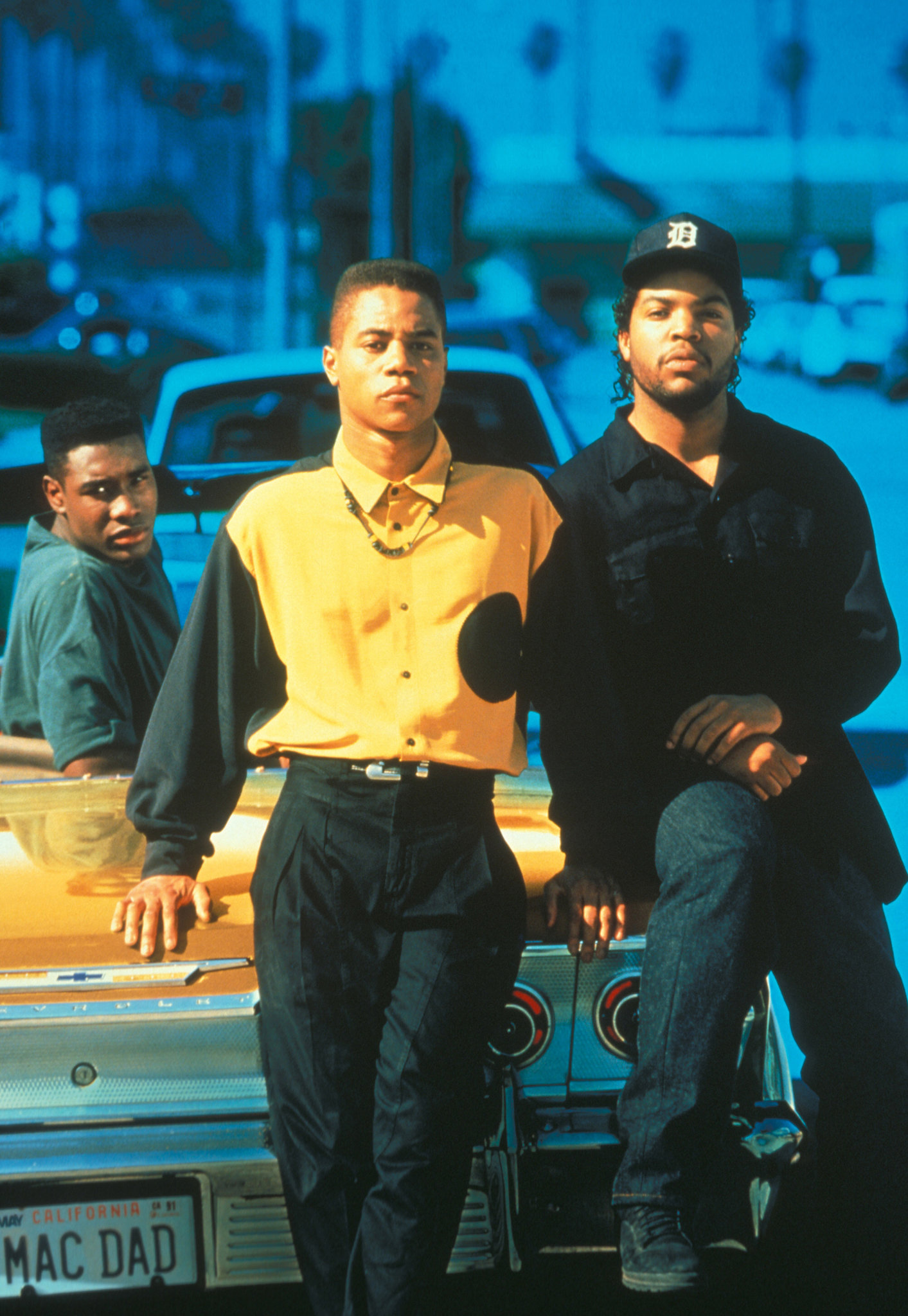
    I wonder to what extent the bad reviews are simply a racist response to the fact that this movie has a mixed-race cast in which the three most important characters are black. But my primary interest here is not to review the movie, but to explore some of the implications of the main character’s job as an NSA spook, and the fact that he is played by Ice Cube.

    Will Radford and the Actually Evil NSA

    The main character in this story is Will Radford, played by Ice Cube from NWA. Will is a low-level agent in the NSA, whose job involves sitting in an office accessing various apps to spy on members of the population to check for “threats”, as well as ghosting agents in actual raids. The tools at his disposal are a genuinely excellent depiction of an electronic surveillance organization in a cyberpunk dystopia: he can basically block select a section of a map in his app and reveal all the accessible cameras in the area. He can then right-click on any one of those cameras, vehicles or NSA “assets”[1] to bring up a context menu of tools available to him, which includes being able to instantly access the camera and view the street through it. Furthermore, once he has streetview he gets little floating pop-ups over every person in the view giving their name, major information and threat assessment, and if he clicks on them he can monitor their spending habits. He does this in the beginning of the movie to track his daughter on her way to work, determines that she bought a muffin, and then calls her to body shame her for eating the muffin. Top parenting, Ice Cube!

    This isn’t the limit of his powers though! He can access reaper drones to use their weapons, and can also hack cars, so that at one point he hacks a Tesla, drives it to his injured daughter, and programs it to drive her to an emergency center (as well as turning on the aircon). He can also generate all-purpose security keys for any device or program, which he uses to hack his daughter’s laptop so he can monitor her conversation with her (white) boyfriend and to break into a Zoom call. It’s actually a really good depiction of the security state at work, the one we conspiracize about, and better still it’s essential to the framework of the story – the aliens are attacking earth for its data, and a large part of the reason they have recognized the abundance of data is the amount that is being used by the security services.

    You see, the kicker here is that the NSA is running a top secret extra layer of surveillance called Goliath that collects orders of magnitude more data than Will has access to, and that will ultimately enable computers and AI to be used to predict terrorism and crime (and possibly bad thoughts). This system is so secret that Will didn’t know about it, and is shocked when he learns about it. His kids make jokes about him spying on everyone – which he literally, physically is! – and complain about how his job is a bit dodgy, and he’s aware that he’s spying on everyone, but halfway through the movie we learn that there is a further layer of NSA tech that is beyond the pale. We learn this when Will is busy using his technological and surveillance powers to try and save the earth from an attack by super-powered aliens, so the message is very clear: the surveillance Will was doing is good and right, but the new program, Goliath, is going too far, it’s evil, and it has had extra-galactic consequences.

    Essentially the movie sets up a clear moral boundary between having a guy like Will sitting in his office spying on literally everyone on earth to the extent that he is able to see when and where they bought their breakfast, how they paid and what they bought, which is directly shown as good and right; and some nebulous additional level of surveillance that would be immoral, bad, and dangerous. And we are shown all this through the perspective of the hero of the story, the guy who was doing the government surveillance that is good, and who is played by Ice Cube, a famous anti-government rapper.

    Where have the black cultural resistance ended up?

    That’s right, the man whose first solo album was entitled Amerikkka’s Most Wanted, and who sung about institutional racism in the police force, played the NSA spy whose digital intrusions into the lives of ordinary Americans were clearly portrayed as good and necessary. This seems like a far cry from the original political purpose that he was singing for in the late 1980s and early 1990s, doesn’t it? But surely he’s alone in this fall from grace?

    Ice T, infamous for the (excellent!) song Cop Killer on the (excellent!) Body Count debut album, has played a policeman in Law and Order: Special Victims Unit for about two decades. Snoop Dogg was one of the Olympic ambassadors for the 2024 US Olympic team (and apparently very good at it), while 50 Cent attempted to become an investor (even investigating a metals business in South Africa, the most colonial of colonial adventures) before declaring bankruptcy. Tupac is dead, with rumours connecting his shooting to P Diddy, who is being investigated for what appears to be a decades-long rape and sexual assault factory he was running.

    It certainly looks, on the surface, as if one of the biggest movements of black cultural resistance in the USA in the 1990s, the entire rap/Gangsta Rap world, has collapsed into a cultural movement dedicated to churning out propaganda in support of the central planks of American imperialism, and profiting from it where possible.

    It’s worth noting that not everyone accepted these rappers as a form of cultural resistance. Black feminists criticized the language they used to describe women, which was quite new, and other rappers were concerned about the nihilism and destructiveness of the movement. Gil Scott Heron identified this most clearly with his 1994 song Message to the Messengers, which questioned the value of their songs about crime and misogyny, with lines like this:

    You can’t talk respect of every other song or just every other day
    What I’m speakin’ on now is the raps about the women folks
    On one song she’s your African Queen on the next one she’s a joke
    And you ain’t said no words that I haven’t heard, but that ain’t no compliment
    It only insults eight people out of ten and questions your intelligence

    Gil Scott Heron wrote that song carefully, to question the content of the lyrics of Gangsta Rap without questioning the motives of the singers themselves, and included this chorus to make this point:

    And if they look at you like they think you insane
    Or they call you scarecrow thinkin’ you ain’t got no brain
    Or start tellin’ folks that you suddenly gone lame
    Or that white folks have finally co-opted your game
    Or you really don’t know…They said that about me a long time ago

    It’s nice of him to be so considerate of the motivations of this political movement, given where they ended up. After all, Gil Scott Heron wrote the famous song Whitey on the Moon, but he never cos-played an astronaut for TV. What does it say about the next generation of rappers that they ended up cos-playing their class enemies on TV?

    Settlers and the co-option of resistance in America

    I am currently reading Settlers, the 1983 radical history of America that argues the US working class are a labour aristocracy, with whom it is impossible for the global proletariat to find common cause. The book’s argument could probably be boiled down simply to “My argument is not with the government of America, but with its people.” It describes the economic development of America (which it writes always with a k, as in Amerika) from its “discovery” to the civil rights era, with the fundamental conceptual framework being that at every step of its development the “Euro-Amerikan settlers” destroyed non-white cultural and economic systems, stole their land and the fruits of their labour, and either killed them or drove them out. For example, consider this description of activities in the south-west of the USA after world war 2:

    Sound like a program that’s being fired up again?

    At every step in this process the author, Sakai, argues that the goal of the “Euro-Amerikan settlers” was to expropriate non-white wealth and labour and steal their land. However, the book describes specific periods of time when the settler state realizes that the black proletariat, in particular, is too numerous and too powerful to destroy, and in those periods it employs various strategies to co-opt the leadership of the black proletariat, offering them incentives and inducements in exchange for their efforts to defang resistance to the settler state. The canonical example of this provided in the book is the co-option of black labour activists in the immediate lead-up to and during the second world war, when black workers were deemed essential to industrial growth during the war and too numerous to destroy, but at the same time the black proletariat had built their own system of unions and radical organizations, and were simultaneously embracing black nationalism and communism. Sakai gives the example of Garvey-ism, a black nationalist movement embodied in the form of the United Negro Improvement Association (UNIA), which was radical and later said to have inspired people such as Kwame Nkrumah and Ho Chi Minh. Malcolm X’s father was assassinated by the KKK because he worked for this organization, and the US government cracked down on it mercilessly. At the same time, however, they built up an alternative activist, A. Philip Randolph, who worked alongside other bourgeois organizations to oppose the UNIA and try to lead the black working class to an accommodationist, integrationist compromise with the settler state. In exchange for steering the black community away from nationalism and communism he and other leaders from these organizations managed to secure some concessions from the settler state, became leaders within their community, and the New Deal was partially extended to black communities. By the end of world war 2 black men were integrated into the army and the industrial base of the military-industrial complex and had become junior, unequal partners in the post-war imperial program of the USA.

    After the war, however, when everything returned to normal, the settler state began pushing non-white people out of industry, which was again returned to the Euro-Amerikan settlers, and a new wave of terror was unleashed on black people in the south. This led in turn to the civil rights movement of the 1960s, and after that the rise of black cultural resistance in the form of activists, rappers and writers like Angela Davis, Gil Scott Heron and James Baldwin[2]. The settlement brokered by those co-opted labour leaders before and during the war had been partial and incomplete, and the post-war, post-New Deal settler state retrenched much of it, leading to the disruption and violence in the inner cities of the 1980s.

    Sakai wrote Settlers in 1983, before the rise of gangsta rap, but I think we can see some parallels in the growth of that movement, what it advocated for, and how it ended up. The focus on nihilistic criminality and money, the individualism and competitiveness, represented a distinct break from the community-focused discipline of earlier activists, a solution to the problems of the inner city based on personal salvation rather than group solidarity. It’s no surprise that one of the major producers of the movement, P Diddy, was eventually revealed to have been running a record studio where sexual assault and playing favours was a key part of the business model. It’s also no surprise that drugs, sex and money replaced politics and love as the main themes of the music. Cop Killer replaces anger against the system with individualistic rage and violence, a loner driving around the city killing single police officers rather than an uprising against the police force as a whole; it is more lascivious, more inviting, but also ultimately futile and self-destructive. As a political program, this kind of stuff led nowhere.

    So it makes me wonder, now that we see where that movement ended up, whether the post-Rodney King cultural resistance among black Americans was actually effectively a co-option of struggle[3], a promise of lucrative rewards to a small number of gangsta rappers in exchange for leading a movement of desperate young men down a blind alley. And once that anger has fizzled out, lost its direction, the deportations and political violence start up again – as we have seen, in the wake of BLM – while the people who led the movement astray get their sinecures on TV, doing copaganda and nationalist propaganda for the settler state.

    This new War of the Worlds movie showcases this perfectly, with one of the main characters from Boyz in the Hood, the man Straight Outta Compton, working for the government to spy on his own people, and saving everyone from an alien threat on TV at the same time as the real-world government his character works for gears up a new program of state violence, concentration camps and deportations the like of which we haven’t seen in almost 100 years. I think it’s pretty likely that this new wave of state violence won’t spare the young black men of modern America, and right now real versions of Ice Cube’s character – who almost certainly aren’t black – are firing up their apps to start spying on the very people Ice Cube once claimed to represent.


    fn1: I really hate this term

    fn2: It’s worth comparing the intellectual, gender, and sexual diversity of that movement with the uniformly hetero and cis nature of gangsta rap. Baldwin was gay, and the movement was much more internationalist, inclusive and politically aware than gangsta rap. This may reflect the reactionary politics of the 1980s in which gangsta rap forrmed, but it is also indicative of an organic mass movement embedded in an enlightened proletariat, rather than a curated movement drawn from a suitable pool of nihilistic and destructive talent

    fn3: I don’t want to get too conspiratorial here; co-option doesn’t necessarily mean that someone in the government identified this strategy directly and reached out individually to these people to groom them. Cultural movements arise from the political circumstances of their time, and the ruling class selects from many bubbling movements those which are useful to it. But at the same time we know that the CIA directly funded authors associated with anti-government movements, and the state worked alongside supposed radicals like Orwell. We’ve all seen the suspicions surrounding people like Epstein, and the awful behavior of the spycops in the UK. It’s possible that a nihilistic and destructive resistance movement emerged organically from the reactionary economic and political climate of the 1980s; it’s also possible that a few gold weights were placed on the scales, to ensure certain movements rose out of balance. Who knows, maybe the CIA are paying me to write this!

  • I have written a fanfic short story set in the world of 28 Years Later, which you can read at Fanfic.net. It incorporates the lore of the three movies (28 days, 28 weeks, 28 years), and all the main elements of the most recent movie, along with my criticisms of that movie, to build a story that I hope is more coherent and politically relevant than the weird thing that 28 Years Later ended up becoming.

    I may have taken slight liberties with the full powers available to Carriers, and I hope I haven’t dwelled too much on survival practicalities. One of the most interesting things to me about the zombie genre is the how? How would I survive? What would I do? It’s easy to get bogged down in that, which is why in years gone past on this blog I wrote a series of posts about Zombie Survival Spots in Tokyo (e.g. Ikaho), so I hope I didn’t bog the story down with those details.

    Anyway, go over there and check it out! Leave a review if you have the passion!

  • He’s probably not as nice as you think

    I just finished reading Hilary Mantel’s Wolf Hall, which is an excellent book about one of UK history’s more influential non-regal people, Thomas Cromwell. Wolf Hall tells the story of his early rise to becoming Henry the 8th’s chief advisor, with lots of reflection on his childhood, his past in Europe and his religious beliefs. In this version of the story Cromwell can speak many languages, worked as a mercenary for years and knows how to fight and kill, has memorized the entire New Testament, and is also a capable lawyer and accountant. He’s also funny, compassionate, loyal and caring, and in some ways too exceptional to be a real person, but he is an incredibly likable and engaging character to put at the heart of a complex story. I think I won’t be reading the next two books in the series, primarily because we all know how it ends (spoiler: he dies), and I don’t want to read hundreds of pages about a great character being undone by jealousy and treachery. It was bad enough in The Tudors! Which wasn’t even directly about Cromwell!

    This post isn’t intended as a review of the book, which is great, but to discuss a phenomenon in modern literature and TV that I find simultaneously engaging and frustrating: the tendency of writers to put a character with modern liberal views into their medieval/fantasy fiction, in a way that unfortunately breaks the coherence of the setting. I don’t know if this is a bad thing, perhaps it’s an essential narrative tool when you’re trying to write a story for modern readers about a world they can’t relate to, but sometimes I find it really jars with the setting, and occasionally drags me out of it. Let’s start with Cromwell as an example, and then look at some other cases, contrast them with a narrative about a conflict of cultural movements, and discuss how jarring it can be.

    Cromwell as liberal stand-in

    Historically Thomas Cromwell played an important part in the broad sweep of Henry 8th’s religious and social policy reforms, including the dissolution of the monasteries, the introduction of new accounting and management structures for the Crown, and the implementation of the principle of royal supremacy (essentially the idea that the King should control the church). In Wolf Hall Cromwell is shown introducing the principle of royal supremacy based on his reading of certain Italian political philosophers, and he is also seen as generally being heavily influenced by more advanced thinkers on the continent. His role, along with Anne Boleyn’s, is played up a little more in the TV show The Tudors, and in Wolf Hall a lot of people are involved in the introduction of radical ideas to England. Nonetheless, Cromwell plays a central role in building the new intellectual and philosophical underpinnings of what will become the English enlightenment.

    More personally, the Cromwell of Wolf Hall is a model of enlightened modern masculinity compared to the people around him. He is open-minded, compassionate, forgiving of others’ sins, and possessed very much of a live-and-let-live philosophy. He treats his children well, recognizes and values consent as it applies to women’s bodies, and for himself and his family he values love in relationships above expediency. Having come from a common background himself he values equality and sees humans as all essentially the same in god’s order, wants to see the Bible translated into English, and has many critical views of church teachings that are consistent with modern liberal ideas about freedom of religion and conscience. He respects others’ privacy and treats women as equals, even noting to himself that he would be more successful if he listened to women more carefully. He does not under-estimate women like Anne Boleyn and wishes that his own daughter could grow up to be the Mayor of London. The Jews have been expelled from Britain and are generally reviled, but he spends time talking to old Jewish women and trying to understand their perspective. He also has a strong sense of having been wronged by noblefolk, and wanting revenge on them. He opposes bullies, and is satisfied to see Thomas More executed partly because of his memory of being mistreated by him when he was a poor child. In these regards he stands out from the people around him, who discount women’s agency, enjoy bullying and reward bullies, and do not consider even the possibility of a world where all people are equal and free to believe what they want or express ideas how they want.

    There aren’t really any points in the story where Cromwell doubts his right to be ascend to the levels he has reached, where he wonders whether his many actions against the natural order might be wrong, or doubts his rights and powers. He is a confident, committed representative of modern liberal values in a world where these values do not exist and will not exist for another 250 – 300 years. On many occasions it is difficult to recognize him as coming from the same world as, having the same superstitions and beliefs, or sharing any of the prejudices of his peers or the community he lives in. Mantel navigates these differences well by stressing his outsider status, his many years in Europe where he experienced many things, and his education and intelligence, but in the end he still retains this sense of being a man out of time, a person from the modern age who somehow got incarnated in 16th century Britain. Much of the pleasure of the story arises from the friction between his beliefs – which you, the reader, largely agree with and which seem very familiar to you – and the beliefs of the society he actually lives and grew up in. It’s fun, but it kind of doesn’t make sense.

    The liberal stand-in as observer and agent in medieval fiction

    This character, who I think of the as the liberal stand-in, is a super common character in stories about medieval or pre-medieval times. There are many examples in fiction and cinema, and they are often the most-loved characters in the story. Let’s consider some examples:

    • Tyrion Lannister in the (TV version of) Game of Thrones, a man who respects the weak and the bullied, who “drinks wine and knows things”, who always has the most rational and intelligent solution to a problem and often approaches problems in ways that go against the superstitions and prejudices of the people around him.
    • Peter Grant, the detective in the Rivers of London series, who attempts to scientifically understand the magic he uses, and is a liberal and left-leaning, open-minded man in one of the most close-minded, racist and backward elements of British society (the police), who attempts to apply modern scientific reasoning and western liberal values to the society of fey and magical creatures that are older than most of human history
    • Robin Hood in the original Errol Flynn movie, who educates Maid Marian in the reality of life among the poor and degenerate of England, and attempts to introduce more liberal values of equality and peace
    • Merlin in the Mists of Avalon series, who has many views about religious freedom, compassion, equal treatment of others and rational inquiry that are completely at odds with the people around him
    • Drizzt Do’Urden, the dark elf of legend, who is a rebel against the racial evil of his own people and wants to build a better life for himself in a world of magic and superstition[1]

    Often the liberal stand-in is not the main character, though sometimes their liberal conflict with the world around them is the central theme of the story (e.g. A Connecticut Yankee in King Arthur’s Court). For example, the main character of The Mists of Avalon is Morgana le Fay, who is a vicious, spiteful, incompetent little monster, and Merlin offers us precious respite from her stupidity.

    The liberal stand-in should be distinguished from characters who reject the moral codes of the world they live in but do so out of selfishness, laziness, or because they are the actual evil person within the framework of the world’s ideology. For example, Cersei Lannister does not maintain her incestuous relationship with her brother because she thinks people should be free to love whomever they choose: she knows it’s evil and wrong and she just doesn’t care, because she’s evil, and we repeatedly see evidence of her viciousness and evil to confirm that her motives are selfish, not ideological. Similarly, most stories about Henry 8th present his changes to the religious structures of England as being motivated by a selfish reaction to the constraints placed on his power by Rome, not by any real ideological commitment to building a freer and more equal religion. He is usually portrayed as a selfish man with the power to ignore his society’s rules, not a man who has an ideological objection to those rules. I think these characters often exist to remind us of the fundamental backwardness of the society we are reading about, or to explain the rules of that society to us from the perspective of the people who fully accept them. The liberal stand-in, in contrast, is there to help us feel comfortable navigating those worlds, to help us enjoy them without feeling dirty for being part of them.

    The liberal stand-in plays a dual role in many of these stories, simultaneously driving the narrative forward by solving problems in ways others can’t and listening to people the other characters won’t, while also interpreting the world for the reader/viewer. They offer an entry into the world that is sympathetic to the basic principles of the modern reader/viewer, while also understanding (but rising above) the narrow-minded superstitions and prejudices of the people around them. Sometimes this sympathetic role is essential for the reader/viewer to remain engaged with the setting, which can be so horrible, grinding or cruel that without the hook of this character we might give up hope on the society and walk away from the story. Tyrion, in particular, plays this role, offering us respite from the misogynist violence, the bullying and the hatred that permeates his fallen world.

    I think I notice the liberal stand-in very quickly now when they appear. They often annoy me, because they stand out like dogs balls from the rest of the characters and make me think “oh, here is the guy who’s going to explain how everything works to me, in language I understand!” Sometimes I wonder if they’ve been put there by the author to remind us that the author doesn’t believe any of this shit, and sometimes I wonder if the writer needed them more than we do. In big movies I wonder if they’re partially put there to ensure that the setting is palatable to the producers, who are likely to be very conservative. Sometimes the liberal stand-in makes sense (e.g. Tyrion!) and sometimes it makes no sense at all – Merlin should be the most alien thinker of all the characters in The Mists of Avalon, not the most modern!

    The persistence and ubiquity of this character in literature going back 50 years makes me think that they’re an important part of fantasy writing, a role that is difficult for writers to avoid and that may be necessary to help readers to engage with the setting. Maybe they play a role as a kind of circuit-breaker or pressure release, to help readers navigate settings morally and personally as well as to guide readers through them. But sometimes they can be a very frustrating, reality-suspending impediment to enjoying the story!

    Liberal stand-in or culture clash?

    I once read a theory that Hamlet’s madness should not be interpreted as a moral flaw or as a tragedy brought about by his personal desires. Instead it should be seen as the consequence of the conflict between the enlightenment and medieval thinking. In this interpretation of the play, Hamlet represents modern British sensibilities of Shakespeare’s time, which was heading towards the enlightenment, and in the play he is a reaction against the medieval worldviews of his contemporaries, and the backward role he is expected to take on as a prince, which conflicts with the enlightenment principles he learnt at University. The play can then be seen as an allegory or a morality play about the changing religious and cultural perspectives of England at that time. The play is generally believed to have been written in around 1600, when Britain was definitely heading into the enlightenment and when principles of medieval rulership were being rejected, under the reign of Britain’s first formally-recognized female queen[2]. Many aspects of traditional medieval culture had been rejected, and Hamlet was a personification of that conflict between old and new. In this interpretation of the play, Hamlet could be seen as playing the role of liberal stand-in for 17th century British readers of a story about 14th century Europe.

    However, there is another type of story that he could represent, which does not necessarily require a liberal stand-in: a story about a clash of cultures, in which an old ideology is being superseded or crushed by a new way of thinking. In this story we don’t necessarily need a liberal stand-in character, because the clash of cultures themselves enables us to understand and sympathise with one or both cultures. The model of this to me is the role Uhtred plays in The Last Kingdom. The narrative of this story is Uhtred’s efforts to restore his lands, but the broader context is the clash between christian and pagan culture in England. The pagan culture is represented by the non-christian Danes, not just Uhtred but also Brida, Haesten, those insane Welsh dudes, etc. On the other side is Christian culture represented by Alfred the Great, Aelswith and various priests and advisors who all hate Uhtred. The clash of cultures is personified in the fractious relationship between Uhtred and Alfred, where they consistently fail to understand each others’ perspectives and beliefs[3]. The Danes in this story have many beliefs that we modern viewers might hold, such as their willingness to allow women in battle, their sexual licentiousness, lack of genuine concern about homosexuality, etc. but they’re also wildly different from us. They have a might-makes-right kind of viewpoint, maybe a bit of human sacrifice, pretty hazy about concepts of consent and conscience, and are deeply superstitious. Neither of the cultures depicted in the story are cultures we modern liberal viewers can be comfortable with, but in the tension of their conflict we can learn about them and enjoy the frustrations and challenges the characters face, without necessarily requiring a specific character to guide us through it. If there is a liberal stand-in in the Last Kingdom I don’t think it’s Uhtred so much as Father Beocca, who advises Uhtred on how to negotiate his conflicts with christendom, regularly counsels restraint to angry Alfred, and helps us the viewer to comprehend what’s going on. I’m not sure he fully counts as a liberal stand-in, but he’s the closest we’ll get.

    Is the liberal stand-in necessary?

    It’s strange to me that so many fantasy stories are unable to imagine a world with more modern or liberal politics than the actual politics of the middle ages. There’s no special reason that a society with no christianity, without even a monotheistic spiritual background, and often with magic to replace technology, should be so socially and politically backward as the societies we so often read about in many fantasy stories. I wonder if this is because the typical modern western writer can’t envisage real conflict occurring in the societies they grew up in, and so they imagine that if their fantasy world had more modern or less hierarchical politics it would not have the stirring conflicts between good and evil that often form the basis of the stories in fantasy worlds. As a result we get presented either with settings drawn directly from archaic social structures, or with classical medieval settings built around monarchist, patriarchal and violent societies. Maybe it’s a failing of our own understanding of our own history? I’ve written before about the stunted imagination underlying some of the settings we are used to reading, about the misogyny of Game of Thrones, which is well beyond any real world equivalents from our history, and about how the economics and demographics of these settings have to be twisted to support the depth of misogyny and hatred that are imagined for some of them. Things are better now than they were 10-15 years ago when I wrote those essays, but the choice of settings and the conservative politics of those settings remains a problem. I think the liberal stand-in is necessary in these settings in order to give the reader a little breathing space to get away from the politics that the writers seem to assume is essential to the setting. But is it really necessary to construct these settings in this way? Can we just imagine societies with medieval tech, magic, monsters, and polytheistic beliefs in which the politics is fundamentally liberal, or at least different? Why do we need wizards to be accompanied by kings? Why do knights have to always ride through landscapes where women can only be goodwives or whores? Is it possible to construct a bigger vision of different pasts than just the crabby, narrow-minded, monarchic shitshow that Thomas Cromwell got beheaded for trying to improve slightly?

    If we did imagine fantasy settings with more diverse social structures, maybe we wouldn’t need the liberal stand-in. Maybe we could enjoy them without needing an interpreter or a guide to tell us it’s okay to be part of them. Maybe we could have more sense of fellow-feeling with the ordinary people of those worlds, and enjoy their superstitions and limitations without feeling like we are secretly soiling or demeaning ourselves. Things are better than they were when I started this blog, but it would be nice if fantasy could abandon the politics of kings and knights and inquisitions and whores, and build worlds we did not feel so morally and emotionally alien in. Then we might not need the strange, slightly out of place liberal interpreter to guide us into and out of those worlds, wouldn’t experience the jarring sensation of suddenly reading about a guy just like us who feels as out of place in the world as we do. Instead of liberal guides, in 2025 let’s try and build worlds that are less anachronistic!


    fn1: I confess it’s been a very very long time since I read these books!

    fn2: It’s worth noting that a lot of the changes that happened during Henry 8th’s reign, some of which directly benefited Elizabeth or made her job easier, were enacted precisely to stop Elizabeth’s reign from coming to pass. Henry wanted a boy, who would grow up to be a king, so that neither Elizabeth or his formerly-legitimate daughter Mary would succeed him, because the idea of a woman inheriting power in England terrified everyone, including him. It was only his dismal failure to produce a male heir (which was apparently entirely the fault of his six wives…) that led to the kind of reforms that enabled Elizabeth to be so successful, and those cultural changes I think to a certain extent must have helped to lay the groundwork for the English enlightenment that Elizabeth’s reign ushered in.

    fn3: To me the final conversation between Alfred and Uhtred as Alfred is dying is absolutely splendid theatre, and Alfred is one of the greatest supporting characters of the genre. What a legend that actor was[4]

    fn4: Helped by the fact that he looks so much like Brett Anderson from Suede

  • This couldn’t happen now?

    When I lived in Sydney my kickboxing teacher was Mick Spinx, a master of Karate, Jin Wu Koon Kung Fu and kickboxing. Mick worked as a builders labourer, and spent the 1980s fighting in no-rules martial arts contests around Asia, before he retired, set up a part-time gym and established a builder’s business. He eventually retired from his main line of work, sometime in the 1990s, to devote himself full-time to teaching martial arts. He owns a beautiful house in a beautiful part of Southern Sydney, and fighters from the gym he founded have a storied reputation in kick-boxing, MMA and Muay Thai.

    At the same time as Mick was setting up his kickboxing gym Wal Missingham brought Wu Shu and Jeet Kune Do[1] to Australia, somehow managing to collect a fleet of Volvo cars and a big house in the suburbs of Western Sydney while running a gym and spending some time in prison. In the 1970s Tino Ceberano (whose daughter is *that* Kate) introduced Karate to Australia and popularized it. At the same time, stoners and losers across Australia and the USA were dropping out and heading to the beach, turning surfing into a hobby and a sport that everyone now knows about. In the UK, punk, heavy metal and folk metal bands were creating some of the most powerful forces known to modern culture, while living in dodgy share houses and working in minimum-wage service jobs. I myself, for 3-4 years in the 1990s, worked part time in Sydney while I did full time political activism, even regularly donating part of my part-time wage to my collective. In Britain, people doing this built the vegan and animal rights movement in the 1970s, brought yoga to their society in the 1980s, and protested nuclear war and hunting.

    Extreme and alternative sports like BMX, break dancing, surfing, base-jumping, MMA, and free-diving were developed in the 1970s – 1990s by young people in the Anglosphere and western Europe who had time, inclination, and no serious impediments to spending their lives devoted to their hobby. Popular music as we know it in the Anglosphere was developed in the same way. Influential bands you know like Crowded House, Guns ‘N Roses, and AC/DC, and influential bands you probably haven’t heard of like Crass, Sisters of Mercy and Dead Can Dance[2] managed to build their entire cultural output while working part time, hanging around in squats and share houses, and doing pretty much nothing useful with their lives for years.

    I saw a comedy routine recently in which a man talked about the “rags to riches” story of tech founders like Zuckerberg. He asked how he was meant to be inspired by the fact that these guys built their tech business in their garage. “A garage?” he asked. “I’m meant to see a rags-to-riches story in that? I could never hope to have a garage! I aspire to be able to save the down payment on a 1 bedroom apartment an hour’s drive from the city. As far as I’m concerned those people are loaded. And not just a garage – if they were building their business in there it was a *spare* garage. Nobody today can imagine having access to two garages in their 20s!”

    I had a garage when I lived in a share house in Sydney in 1995, when I was working part time and doing political activism full time. I would spar there, with a friend of mine who trained with me at Wal Missingham’s JKD school near Parramatta. He was a heroin addict in remission, but he still had a home and a car, and he would drive me out there. We had a lemon tree in my backyard, between my house and the garage. We lived in inner city Sydney, with cats and a guinea pig.

    Who has that now?

    People often talk about how it is a unique property of liberal democracies that they build huge cultural power because their liberal political culture makes it possible. Putting aside the fact that an enormous amount of the cultural output of the UK and USA in the 1960s and 1970s was financed by the CIA, and the fact that some of our most famous liberal icons were treacherous arseholes like Orwell, I don’t think this is the reason for our huge output.

    I think liberal democracies produced huge cultural output in the 1970s and 1980s because they were the richest societies on the planet, and the cost of living was so low that young people could commit years of their life to a hobby for no more reason than they wanted to. Work culture was also different, so people could take time off, disappear for a while, fuck around, and still come back to a rewarding career. If somebody asked you about the gap in your resume you could just say you were FAFO-ing, and they’d be like, okay, sure[3]. That’s exactly what happened to me: after 4 years of part time work somebody just asked me to apply for a full-time job at the Kirketon Road Centre, and I did, and I got it, and my whole career proceeded from that. There were like five other applicants for that job, max, and they all got scared off by the transgender sex worker in the waiting room who was walking in cocaine-boosted circles telling the staff about how she lost her tongue piercing up her lover’s arsehole the night before.

    Now I read stories on reddit about people who submitted 1000 job applications for two years and got two interviews.

    The modern economy doesn’t allow lifestyle sloppiness, gap years, time off to find yourself in Asia. It’s a cut-throat world based not only on having experience before you finish high school, perfect scores and elite university degrees, but on the image of being the perfect corporate dog. You have to *explain* the gap in your resume, your hobbies have to be hobbies you would willingly write down on a CV, your travels have to be designed to factor into your statement of purpose for that master’s admission. In place of grainy photos of your back on the trail to Macchu Pichu you need clear photos of yourself surrounded by poor African kids. If you developed a new sport you need to be able to show that you monetized it, not that you enjoyed it. You spent a year in your mother’s basement developing a self-published role-playing game? Loser! You could have been monetizing your writing skills for some dodgy start-up!

    The effect of this on our cultural output has been and will be profound. Every aspect of our cultural life is being stitched up by rich people, and the economic environment of the modern Anglosphere prohibits young people from taking time out to explore their cultural and sporting interests unless they’re already rich. This is going to directly result in a collapse in new cultural generation in western societies, because the incredibly thin (and shrinking!) slice of western society that is rich enough to take time off to explore new ideas is simply not large enough to generate anything meaningful. This will prevent the generation of, for example, new musical movements from the UK, which historically has been the number one source of popular musical innovation in the world. Similarly, Australia and New Zealand were sporting powerhouses and a source of a huge amount of the raw talent that fed into the music industry and Hollywood, but the diversion of entire generations of young people from those countries into consultancy businesses and crypto is going to be devastating for the global arts industry. There will be no more Germaine Greers, Mel Gibsons, or Kylie Minogues from a society whose kids have to spend more to rent a single room in a share house in Sydney than I spend on my entire mortgage for a house in Tokyo[4]. They’re too busy working to do it!

    If we want to live in societies that are cultural innovators, that produce new sports and art forms and music, we don’t need to have special innovative policies or philanthropy or patronage or whatever stupid idea rich people and their apparatchiks have come up with this week to try and develop a top-down cultural of artistic innovation. We need societies that are cheap to live in, where people can afford to spend years doing nothing economically productive, living on welfare and playing around with ideas. We need a work culture that doesn’t care about gaps in resumes or “unproductive” part time work or “unprofessional” activities and interests. We need a society that rewards people for being people.

    That society is gone, and if we don’t get it back, our culture is going down the gurgler with it.


    fn1: Nino Pila, who I trained with in Adelaide, would beg to disagree about who brought JKD to Australia, but since everyone involved was a terrific arsehole, let’s not fuss too much.

    fn2: I think this band is the single most influential cultural phenomenon of the last 100 years, and one day I will write a blog post on the fact that people all around the world, from every culture and background, who have never been to and know nothing about New Zealand, can instantly recognize Lisa Gerrard’s music

    fn3: With the minor caveat, of course, that this freedom was primarily afforded to white men.

    fn4: A friend of mine from Sydney visited recently and introduced me to this astounding calculation. WTF! This friend had spent 10 years – 10 years! – in the 1990s working in occasional part time jobs and squatting throughout Europe, doing political activism in the Netherlands, London, and some of the former Yugoslavia on basically no money. Try doing that now!

  • The now-mandatory Vaudeville switch at the end of every horror movie

    Update [2025/12/28]

    I have written a short, freely-available novella exploring the world of 28 Years Later, building on my criticisms and observations from this review. If you appreciate my perspective on the movie, consider visiting Royal Road to read the story, and my other work there.


    I took time out of my busy weekend bludging schedule to go and see 28 Years Later, the third in the series of rage-zombie movies that started with 28 Days Later. I’m a big fan of the concept and previous releases, and I think the first in the series is a standout issue in the zombie genre. The origin of the virus, the scenes of post-apocalypse Britain, the shocking violence necessary to survive, and the final showdown that turns the movie into a tale about the evil that men do – it’s perfection in almost every way. The second movie, 28 Weeks Later, is a healthy follow-up that mixes a not-overblown meditation on trauma and betrayal with a solid story about the failure of state institutions, and introduces only a single additional detail, the concept of latent carriers of the virus[1].

    This one, however, not so much: 28 Years Later is a mediocre movie, with a moderately gripping first third, a boring middle with trite philosophy, and an absolutely, stunningly shit ending. Having just emerged traumatized from the Vaudeville switch at the end of The Substance, you can imagine my disgust at being subjected to the exact same tawdry trick at the end of this movie. Is it the rule in Big Cinema this year that horror movies must end with some shitty transition to a completely different cinematic style, aesthetic and pace? WTF.

    Overall, I don’t recommend wasting your time on this movie. It isn’t that exciting in its good parts, it adds material to the setting that is unnecessary and distracting, it has a very boring and frankly stupid middle part that attempts to philosophize in a way that is completely at odds with the basic principles of post-apocalyptic zombie survival, and the ending is a disaster. Apparently the ending presages a second movie in the same series, which – unless it’s set 28 hours after the ending of this one – is going to completely betray the basic structure of the entire series. What a fucking disaster! If, however, you’re like me and you need to see every movie in a series just to find out what they’re doing to it (as I regret doing with Star Wars), then sure, go and see it, but don’t expect anything good. And don’t read the rest of this review, because it’s going to be full of spoilers.

    Britain 28 years later

    The movie opens in a small community on an island off Scotland, separated from the mainland by a causeway that is flooded and protected by a strong current at all times except during low tide. They have built walls around their island and established systems of defense and survival, so it’s all going relatively well. The island is quarantined, and at night you can see the quarantine ships patrolling beyond the coast, making sure nobody escapes. The main characters, Spike and his dad (who is a dickhead) are introduced along with Spike’s sick mother Isla, and then Spike and his dad travel to the mainland, which seems to be a rite of passage for the boys of the island.

    At this point the soundtrack becomes the “Boots, boots, boots” poem, which is played over the trailer you would have seen, and which was awesome in the trailer but strangely out of place in the actual movie. I wondered if they were going to pull it off, and I think they failed. This is interspersed with strange visions of war from old movies, and scenes of zombies filmed with darkvision that seem to suggest that Spike (a 12 year old boy who is the main character of this movie) has some connection with the zombies (this is the first of many misdirections). We see Britain 28 years after the virus outbreak, learn that there are not many zombies left and they seem to be easier to avoid. Some have become these kind of slug-like humans that crawl along the ground eating worms and carrion, easily killed. We see abandoned villages and learn that nobody, basically, is left alive on the mainland, it’s a dangerous place and very few people have survived 28 years of wandering rage zombies. The zombies are now a kind of wild phenomenon, like an animal, that lives on the huge herds of deer and other animals that have returned to a re-wilded Britain. This vision of post-apocalyptic Britain is cool!

    Then we run into the first big problem with this movie: The Alpha.

    The many distractions and modifications

    Obviously every new addition to the series is going to introduce some new ideas and modifications to the rage virus, but this movie introduces two that are absolutely disastrous: the Alpha and his breeding harem. Spike and his stupid dad stumble on such an Alpha near the beginning of the movie and have to flee back to the island, barely escaping with their lives. The Alpha is a new type of zombie, bigger and faster and tougher than the others and also smarter: Spike’s dad realizes that they’re dealing with an Alpha when Spike notices a dear’s head high up on a tree like a trophy or a warning, and they immediately flee. Nobody understands how Alphas happen, but they exist and they’re rare.

    Later on we meet a second Alpha, called Samson (not by itself) and here the distractions really start to multiply because it seems pretty obvious that Samson has a harem of female zombies around itself, one of which is pregnant and gives birth to a healthy baby while Spike and his mother watch. In this one scene we introduce three insane additions to the series:

    • Zombies can breed (which kind of makes sense, since they’re not dead), and their babies are uninfected because of “the miracle of the placenta”[2], which is kind of hard to believe because if you get one drop of blood in your eye this virus infects you and seconds later you’re eating your own children, but somehow you can be born open-eyed and not get infected by a drop of your mother’s various fluids! It would make much more sense if you were born a carrier, like the adult woman in the second movie. Also, apparently this baby needs milk, so none of these infants would ever survive, right? Now we can imagine a story where the Alpha keeps some human communities alive and hands over the babies to the communities to raise, then takes them back as adults – like a kind of horror version of the fey. That would lead to some really cool horror, where communities in mainland Britain survive through horrible compacts with the creatures in the forest. But no, our writers are too stupid to draw such a long bow.
    • Alphas maintain harems, and defend them and support them. They’ve kind of evolved in a couple of generations to be kind of like apes, with a single superior leader-figure that maintains bands of the other infected, which it kind of organizes. Alphas are still not very smart, and their primary defining trait is that they’re huge and violent, but they have begun to establish a rudimentary community structure in the zombies. This would make for interesting stories! But our writers are too stupid and useless to bother with this
    • Isla (Spike’s mother) can commune with these creatures. They stumble on one of the Alpha’s harem having her baby in an abandoned train[3], and Isla is able to calm it down and kind of form a bond with it, helping it to have the baby and not getting harmed immediately afterwards. This is a huge hint that Isla is a carrier of the rage virus (like the woman in the second movie). It doesn’t make any sense otherwise, does it? But then the moment passes and the zombie mother attacks her.

    This last point, where Isla seems like she might be an infected carrier, is hinted at earlier too, when Spike leaves his sick mother some bacon and when he comes back there is a camera angle that suggests she ate it violently. This concept of a carrier was introduced in movie 2, and it would also explain why Spike has some vague visions of Zombies – maybe he, like Isla, can somehow commune or empathize with Zombies but since he was born to a woman who is a carrier his communing power is weaker or something. But instead, we just find out she has brain cancer and the entire thing is fucked off down the river and introduces us to the boring middle of the movie.

    Subsequently other distractions we learn about are that a mixture of Iodine and something else, smeared on the skin, repels zombies; and that a mixture of two commonly-available drugs can be used to put them to sleep. But at the end, when Spike is traveling by himself, he doesn’t have any of these strategies on hand. Why not? Because this movie is interested in bamboozling you with stuff, but not exploring any of it.

    These distractions really annoy me. I don’t mind having new concepts added to the rage virus, and I like it when people try to explore the implications, but in this movie they throw all these things in without purpose, and in some cases undermine them immediately after introducing them. Is it meant to keep us guessing, so we aren’t sure how it’s going to end? Is it all setups for future movies? Or is it just that the writers threw everything they could at the wall, and hoped to see what would stick? I think the latter. So that just complicates the movie unnecessarily.

    The philosophy of death

    We learn more about Alphas and their babies in the middle of the movie, when Spike runs away from his community with his sick mother Isla to find a guy called Dr. Kelson, who he has heard about from his grandfather/uncle/random old dude, and decides might be able to cure her even though he’s been warned Kelson is a freak. Kelson is played by Ralph Fiennes, who seemed to be phoning it in to me but who some reviewers said offered a stellar performance (never trust reviewers!). Kelson is building a huge garden of bones, a memento mori, which he hopes will survive the epidemic and stand witness to all the people who died. He introduces Spike to this garden of bones, his tools to protect himself from zombies and Alphas (the iodine sunscreen and the drug respectively), and then does a basic diagnosis of Isla: she has brain cancer, which either metastized to her breasts or came from them, and is going to die soon. This leads to the central theme of the middle part of the movie: Spike has to learn to reconcile himself to death, through the euthanasia of his mother and then Kelson rendering her down to her skull, that Spike can add to Kelson’s garden of bones.

    You read that right, folks: This zombie movie wants you to meditate on the inevitability of death, and learn to accept it. Every other moment of every other zombie movie in history is filled with the desperate struggle of the few survivors against death, the certain knowledge that death is not the end because the dead come back to eat you, and the spiritual dread of knowing that you don’t go to heaven or hell, but if you die in the wrong way you will spend eternity shuffling around feasting on raw brains. The few people left do everything they can to stave off death, and take enormous risks to save a single life, because every life is rare and precious.

    But in the middle of all that, this movie wants you to think about how you need to accept death.

    Fuck off.

    The awful ending

    That stuff was all mostly forgivable in the circumstances, until the last five minutes where Spike is traveling to find himself (yeah kids do that on the zombie-infested mainland now!) when he is attacked by some zombies and runs away, gets caught against a barrier, and thinks he is going to die until a bunch of weird, healthy-looking young people appear, all wearing perfectly clean velour sports suits, and offer to clean up his zombie problem for him. They then fight the zombies using various fancy weapons in a highly-stylized way, with weird music, that is something like a homage to A Clockwork Orange combined with the over-the-top slapstick combat style and gory bloodfest of Kingsman. It is absolutely, completely out of place. The aesthetic is different because up until now everything has been grimy browns and greens, the kind of clothes survivors would wear after 28 years of grim clinging-on, but these guys are all in shiny primary colour velour sportsuits. The filming style itself is different, much more like splatter-gore than the rapid shifting first-person panic style we are used to in this series. And the theme is different, the breathless desperate survivor-horror replaced with a kind of Vaudevillian over-the-top, highly colorized extravagant action movie fun. It’s like if Jackie Chan walked into Day of the Dead wearing WWE spandex and started beating up zombies with a rainbow-coloured golf club. It just doesn’t work.

    Worse still, I learn from the internet that the main character leading this team, Jimmy, has styled them all on Jimmy Saville, Britain’s most prolific child sex abuser, who was still a national hero in the time that the rage virus originally broke out (his crimes were uncovered about 10 years after the release of the first movie). I didn’t realize this at the time, but I think it’s in extremely poor taste. It makes sense! The people in this alternative history Britain don’t know that Jimmy Savile was a pedo and a necrophile. But it wasn’t necessary! Especially since introducing his luscious style completely changes the aesthetic of the movie!

    This really ruined the ending of the movie for me. It just didn’t work. It’s one of those moments when the writers are basically just saying to their audience: Fuck you, we know you’ll pay us anyway and we don’t have to even try, and we certainly aren’t going to respect your fucking genres or the history of these movies you love or you as consumers of culture. Fuck you, they are saying, you are stupid and worthless pigs who consume our slop whether you like it or not and if we want to squeeze three movies into one because making three separate movies on three different topics is too much effort for us we will and you will like it or you will fuck off, because the reviewers won’t warn you that we’ve fucked something you love, will they, because they’re on our side, and what else are you going to do? We control this industry and we make these movies to show how cool and special we are, not because we owe any artistic or cultural duty to you, you fucking filthy plebeians.

    Every time they do this to one of these series, that’s what they’re telling you. This movie was written by Alex Garland and produced and directed by Danny Boyle, the guys who made the original. They have chosen to undermine and trash their own cultural work for no more reason than that they’re lazy, sloppy wankers who don’t respect their own cultural contributions. It’s shit, and I hate it when they do this.

    So fuck them.

    A side note on race and sex in this movie

    There are only three women who have more than a bare second of screen time in this movie:

    • Isla, Spike’s mother, who is weak and sick and confused and so useless that she needs to be protected by her 12 year old son (except for one moment when she kills a zombie and then forgets she did it), and whose primary purpose in this movie is to die and teach Spike something (though it’s not clear what)
    • Rosie, a friend of Spike’s parents, whose sole contribution to the movie is to fuck Spike’s dad (Isla’s husband) while Isla is sick in bed
    • A zombie woman, who despite being infected with a rage virus is able to commune with Isla through the holy bond of motherhood, which helps her to give birth to a baby, before she gets brutally gunned down by a Swedish man[4]

    So, sluts, madonnas and breeding vessels, and all the breeding vessels die.

    Every actor in this movie is white, except Chi Lewis-Parry, a mixed-race man who plays Samson, the zombie Alpha that is superhumanly strong with a huge cock and a harem of white zombie women, some of whom are pregnant.

    It’s perfectly possible that Spike could have been cast as a girl, so that the journey to the doctor was a mother-daughter bonding story. It’s possible Spike’s dad could have been the sick one, his mother the untrustworthy gatherer who fucks around with other men from the community, so that the journey to the doctor becomes a father-son bonding story. It’s possible that the community could have been much more mixed race, accepting any survivors no matter what because of the desperation of clinging to life in the islands. It’s possible that the zombie Alpha could have been the same race as the majority of the British community that was originally infected with the virus in the original movie. It’s possible that Spike’s dad didn’t have to cheat on his wife, or that the only other woman with more than five seconds of screen time wasn’t there just to be sexy in a summer dress.

    All of these decisions could have been made, in 2025, in the modern world. But by some incredible coincidence they weren’t, and by amazing happenstance we are subjected to another movie where the black character is a terrifying embodiment of primeval masculinity with a huge cock, and the women are all sluts, madonnas or breeding vessels. Who could imagine such ill fortune would plague an experienced movie writing, directing and producing team in 2025?

    I should have taken the hint from this guy

    Conclusion

    Don’t waste your time on this movie, and if you do decide to stick it out to see what’s happening in this series, don’t expect anything good from this or the next one. Don’t expect a coherent progression in the basic laws of the world, or any adherence to the principles and frameworks of the previous installments. Don’t expect any deviation from the sexism and racism of the 1980s where the director and producer were raised. Perhaps you can hope for some shitty philosophy that is inconsistent with the setting. Maybe the next installment will be a musical! We can but hope! If we’re really, impossibly lucky, maybe the team who made this one will figure out what they’re trying to do, and instead of subjecting us to three completely incompatible movies in one they’ll decide on a thematic principle and stick to it. But they certainly haven’t done that yet!

    I traveled to Roppongi to watch this movie, on a 32C day in pre-summer Tokyo[5], when I could have stayed home and snoozed or played computer games or watched some shitty anime on a streaming service. When I got to the cinema a crow was standing on the bench area outside the cinema entry, tearing the guts out of a pigeon it had just killed. It nonchalantly ignored thousands of passing Tokyo-ites who all stopped to stare in disgust at it, and eventually a second crow joined to wait for its portion of the delicacy. It was kind of funny that this crow was doing this just before I went in to watch a zombie movie (even funnier when I discovered that the Alpha kills people in a very similar manner to the way the crow was eating its pigeon). I probably should have taken it as an omen and just turned around and gone home. Instead I went inside, and sat in a quite warm and very packed theatre, endured some very tedious advertising, and parted with ¥2000 (twice my monthly Apple music subscription!) to watch this ordinary and vaguely insulting contribution to modern culture. I don’t think that the people who made this movie did so with much concern for any of these decisions that I and millions of other people around the world made. I don’t think they respect us at all, in fact. I’m sure they’re bemoaning the decline of cinema and blaming it on streaming, computer games or TikTok or something, but the simple reality is that if they want me to leave my house and shlepp across town in the heat, past the cannibal crow, and pay a chunk of money to sit in a crowded theatre with a bunch of strangers, they need to try a little harder. We all know what they’re capable of, because we saw it when they made the original movie and Trainspotting. Is it possible Boyle has lost his touch in his old age? Yes, I guess it is. But more likely is that he’s lost his respect for us his viewers, and thinks that we should thank him for whatever shit he decides to squeeze out for us, and complains that we’re easily distracted if we decide not. Easily distracted, from this shit? You bet!

    He’s not alone in this. The people who made The Substance did the same thing to us, as did the people who made every woeful installment of the Star Wars sequels, and who insult us with year after year of degraded schlock from various useless superhero franchises. They just don’t respect us, they don’t respect cinema as a medium of artistic expression (no matter how much they bleat about its decline) and they definitely don’t respect any of the genres they work in. So we should stop respecting them, and we should show it by not paying them.

    So, don’t waste your time and money on this movie.


    fn1: I’m going on memory here so don’t quote me.

    fn2: Which is weird because lots of viruses cross the placenta – here’s a list. How convenient that this one doesn’t!

    fn3: The abandoned train was great, a very nice piece of urban ruin

    fn4: This Swedish soldier is funny because he is marooned on the island and trying to explain 2030 European life to Spike, an 11 year old boy who grew up on zombie-wasteland Britain. This Swede doesn’t last long, despite his advanced gear, which is also great

    fn5: People from “hotter” places may not understand what those words mean. People who live here do!